



Cruise operator Royal Caribbean is down as much as 6% in today’s session. This is a reaction to a significant transaction the company may close in the near future.
The transaction is Royal Caribbean’s purchase of a 50% stake in Sandals Resorts. Sandals Resorts operates 17 vacation resorts in the Caribbean, mainly around Jamaica. The purchase price is expected to be USD 3 billion, with financing to be provided by Morgan Stanley. The multiple cited in publications about the deal is roughly 10 times EBITDA.
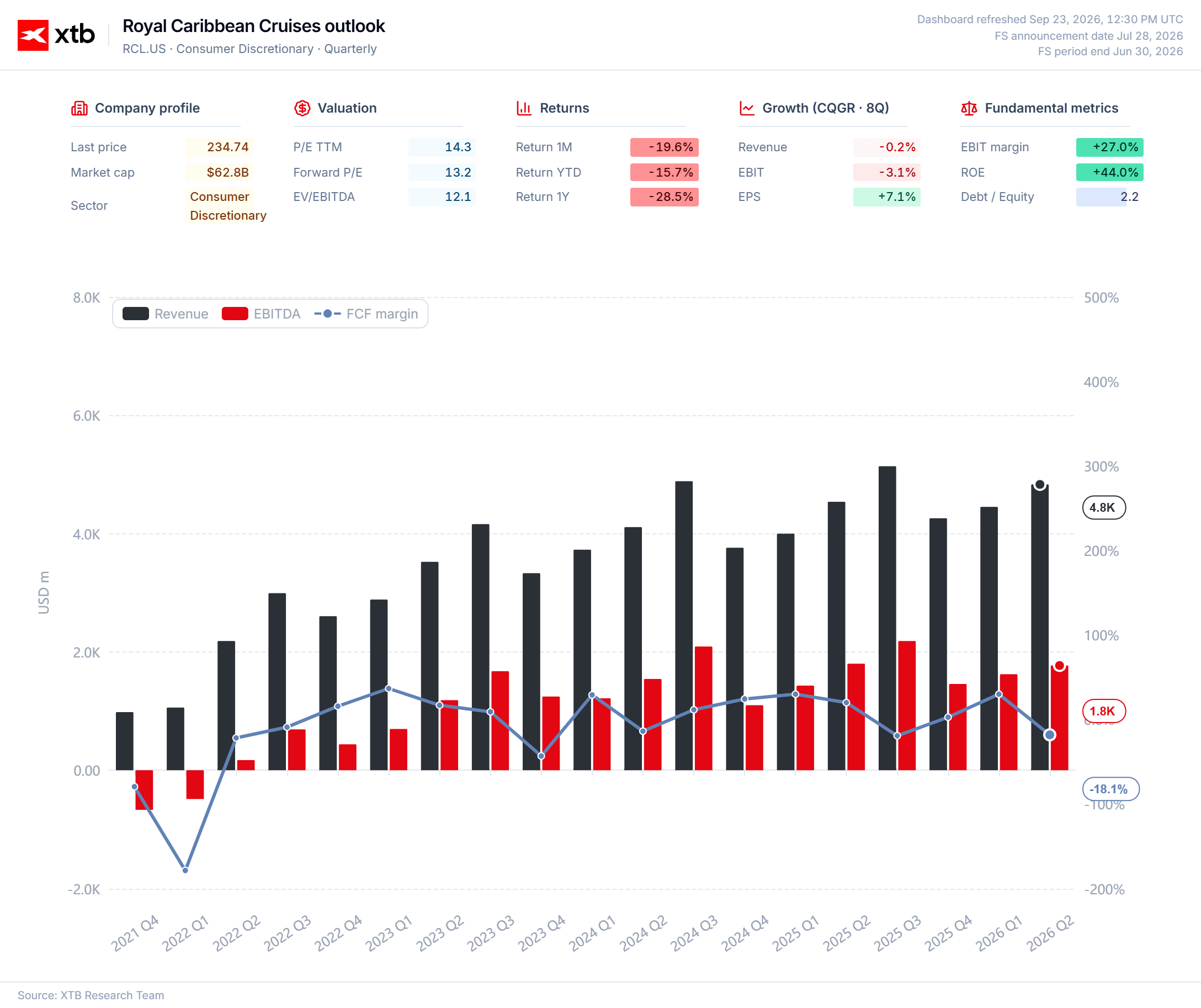
Comparing these metrics with the official valuation suggests that the acquired resort business generates EBITDA of around USD 600 million per year. Extrapolating average margins in the sector in that region implies additional free cash flow of about USD 100 million per year. Management speaks optimistically about the deal, projecting it will close in early 2027 and begin delivering benefits that same year.
However, these are purely theoretical assumptions due to the lack of other information, such as Sandals Resorts’ debt or required capex. And that is only the beginning of the issues with the company’s presumed new acquisition.
Large debt funded purchases
Sandals Resorts is to be managed jointly with the Stewart family, which has owned and run the resort business to date. This means Royal Caribbean’s control will not be absolute, although Financial Times reports that over time Royal Caribbean is expected to acquire the remaining stake.
A much more important issue is Royal Caribbean’s own financial situation.
The cruise operator has a fairly large debt problem, and taking on additional multi billion dollar loans in a period of elevated cost of capital is, understandably, viewed negatively by the market.
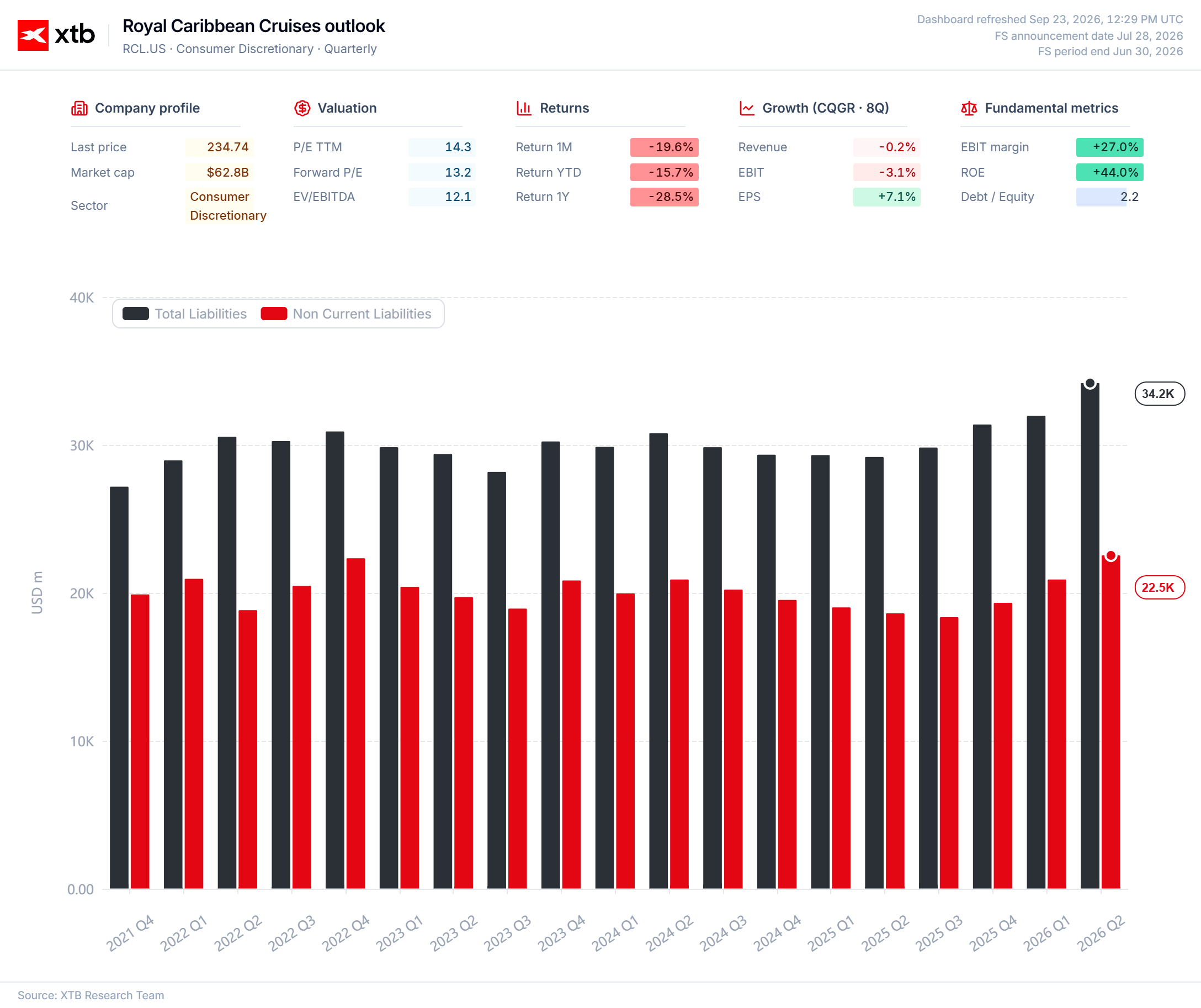
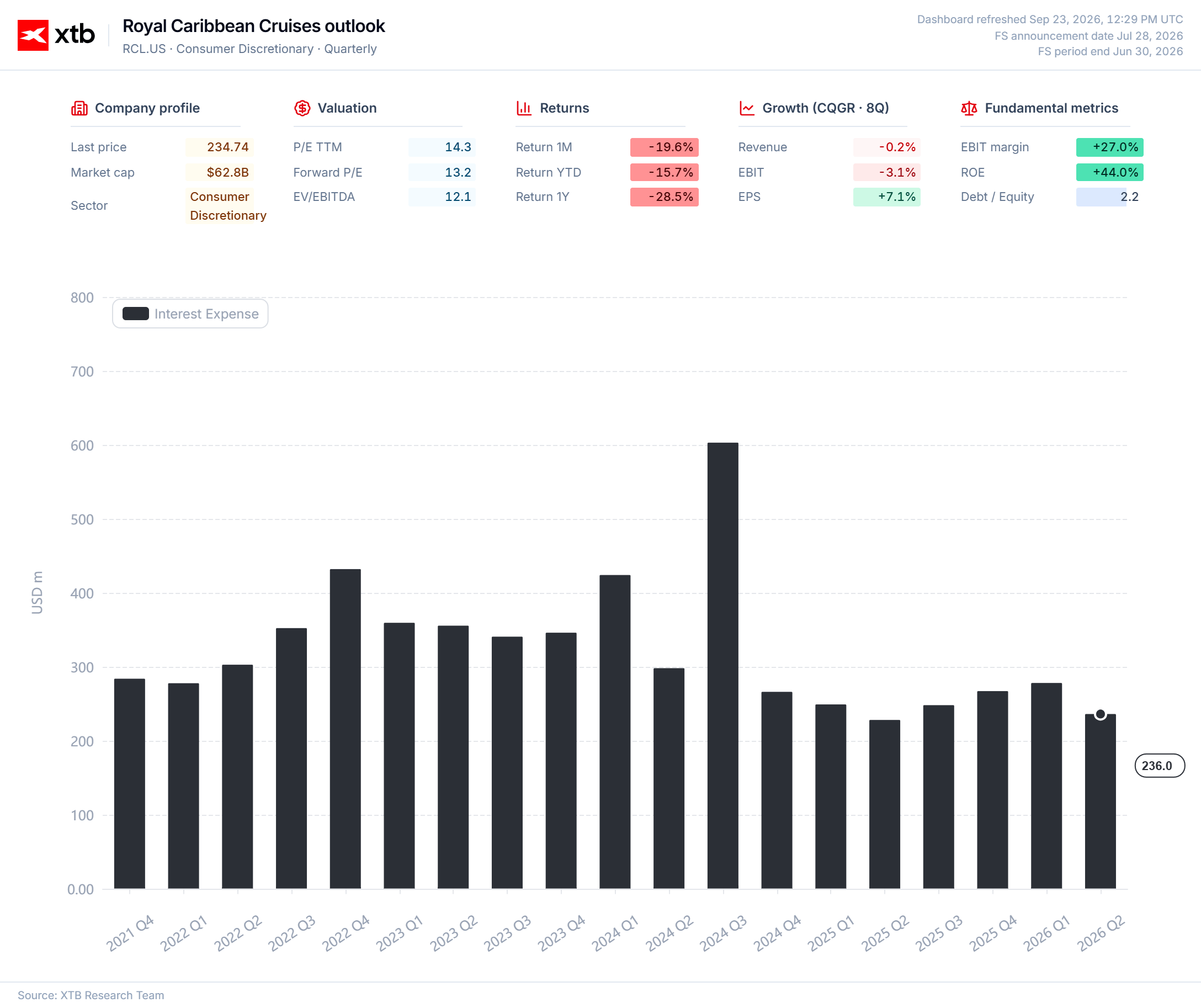
The company currently carries USD 23.4 billion of debt on its balance sheet, and it is still rising. The average cost of financing is about 4.66%. That implies annual debt service costs of roughly USD 1.2 billion. The company’s debt situation is not black and white, however. With the company’s current rating in the lower range of investment grade, refinancing would imply a rate of around 5.8%. But most of the company’s liabilities remain long term.
If the company were to borrow to fund the Sandals Resorts purchase at today’s rates, it would mean the cash flows from the investment would likely be negative for many years. But expecting free cash flow profitability from this investment is, fundamentally, a misunderstanding of Royal Caribbean’s business model.
Business model
Royal Caribbean stands out not only for high leverage, but also for a high margin compared with other cruise operators. This relationship is not incidental.
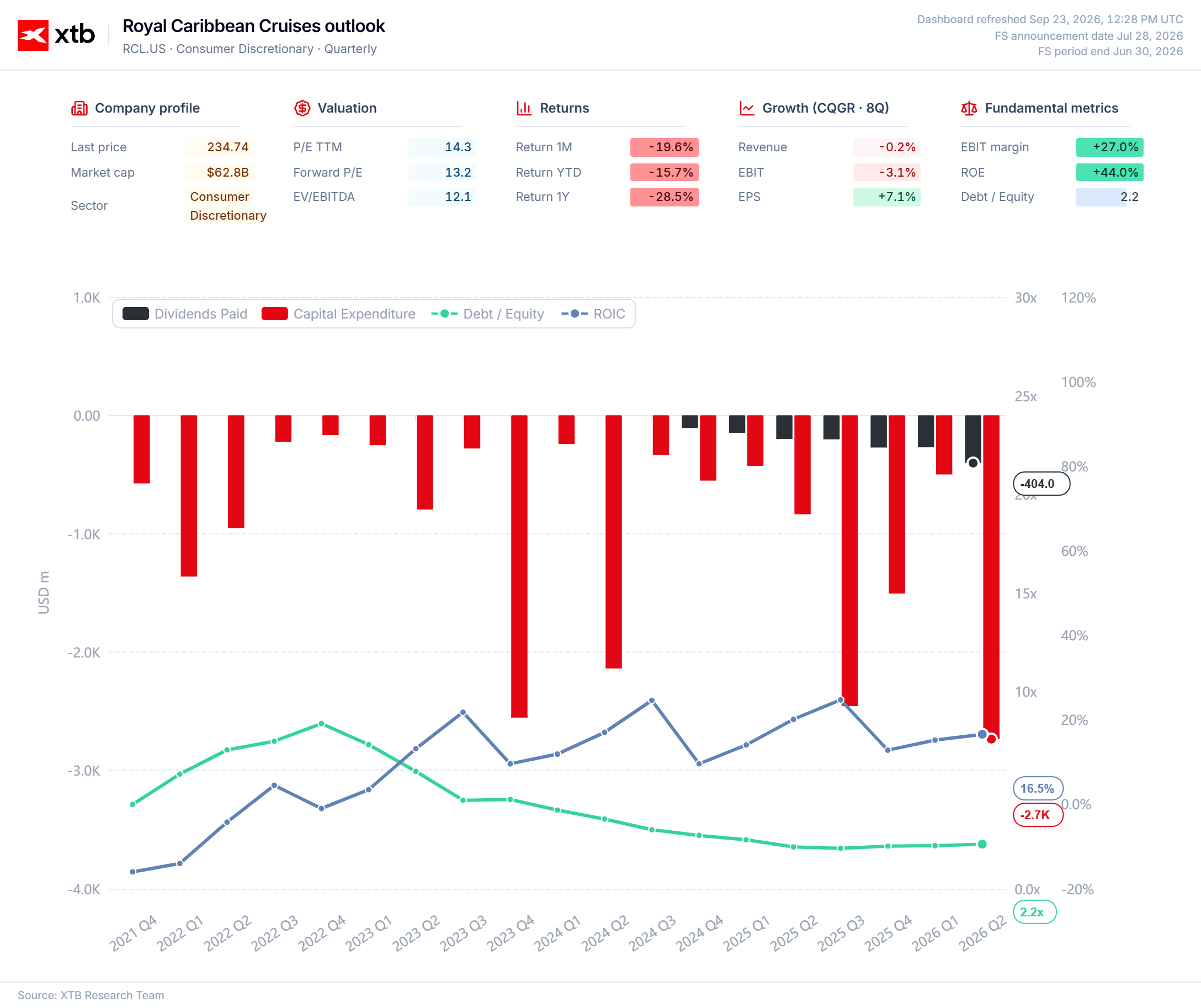
The cruise business is capital intensive by definition. The key measure of operating efficiency is not low debt, but managing debt effectively.
The reference to the Caribbean in the company’s name is not a marketing gimmick. It is the company’s primary region of focus. In recent years, a clear shift has been visible toward turning not only the cruise itself into a product, but also the destination.
Owning resorts enables synergies, combining distribution channels, and diversification.
In this context, for Royal Caribbean it means:
- Buying resorts means consolidation of the local market (the Caribbean) and a better ability to defend or expand margins.
- Acquiring new customers and retaining more of them within the group during their vacation. This potentially means a large increase in profitability for both business components without major cost expansion (apart from interest).
- Diversification toward fixed, land based vacation destinations reduces the company’s exposure to commodity markets and geopolitics.
Fundamentals vs perception
If debt is not as big a problem as the nominal debt figure suggests, and the acquisition is the execution of a long term strategy, then why the selloff?
Sentiment toward cruise operators has been negative for some time. This stems from oil prices and monetary policy, which hits the sector twice.
- Higher interest rates in response to inflation worsen companies’ ability to manage debt and expand leverage.
- Oil and distillate prices translate directly into company costs and compress margins.
In these conditions, the market is less focused on potential value over a multi year horizon and reacts more to recent impulses. However, geopolitics may paradoxically have a positive impact on Royal Caribbean. Because most of the Middle East remains in an ongoing armed conflict, this may catalyze a shift in vacation destinations from the Middle East to the Caribbean or other regions that can offer safer leisure travel.



Dow Jones, S&P 500 & Nasdaq 100: Zinsangst und steigender Ölpreis belasten US-Börse

Market wrap: European indices under pressure from a stronger dollar 🚩 Quantum stocks Gain, IONQ jumps 12%



Daily Summary: Trump’s UN Speech Puts Iran, Hormuz and AI in the Spotlight


AWS Gets NATO Approval. Opening the Door to More Defense Contracts
The content of this report has been created by XTB S.A., with its registered office in Warsaw, at Prosta 67, 00-838 Warsaw, Poland, (KRS number 0000217580) and supervised by Polish Supervision Authority ( No. DDM-M-4021-57-1/2005). This material is a marketing communication within the meaning of Art. 24 (3) of Directive 2014/65/EU of the European Parliament and of the Council of 15 May 2014 on markets in financial instruments and amending Directive 2002/92/EC and Directive 2011/61/EU (MiFID II). Marketing communication is not an investment recommendation or information recommending or suggesting an investment strategy within the meaning of Regulation (EU) No 596/2014 of the European Parliament and of the Council of 16 April 2014 on market abuse (market abuse regulation) and repealing Directive 2003/6/EC of the European Parliament and of the Council and Commission Directives 2003/124/EC, 2003/125/EC and 2004/72/EC and Commission Delegated Regulation (EU) 2016/958 of 9 March 2016 supplementing Regulation (EU) No 596/2014 of the European Parliament and of the Council with regard to regulatory technical standards for the technical arrangements for objective presentation of investment recommendations or other information recommending or suggesting an investment strategy and for disclosure of particular interests or indications of conflicts of interest or any other advice, including in the area of investment advisory, within the meaning of the Trading in Financial Instruments Act of 29 July 2005 (i.e. Journal of Laws 2019, item 875, as amended). The marketing communication is prepared with the highest diligence, objectivity, presents the facts known to the author on the date of preparation and is devoid of any evaluation elements. The marketing communication is prepared without considering the client’s needs, his individual financial situation and does not present any investment strategy in any way. The marketing communication does not constitute an offer of sale, offering, subscription, invitation to purchase, advertisement or promotion of any financial instruments. XTB S.A. is not liable for any client’s actions or omissions, in particular for the acquisition or disposal of financial instruments, undertaken on the basis of the information contained in this marketing communication. In the event that the marketing communication contains any information about any results regarding the financial instruments indicated therein, these do not constitute any guarantee or forecast regarding the future results.