


- Gold disappoints after a strong run
- BP catches up with peers as oil price surges
- Dividend ‘Aristocrats’ in focus
- Pepsi goes flat
- Gold disappoints after a strong run
- BP catches up with peers as oil price surges
- Dividend ‘Aristocrats’ in focus
- Pepsi goes flat
Inflation is coming. As oil prices remain elevated, the first signs of the impact of the war in the Middle East are trickling in. March PMI data is flashing warning signs that growth is already slowing and businesses across the world are taking a hit from rising cost pressures.
Taking the UK as an example, service sector activity rose at its slowest pace for 11 months, according to the S&P Global PMI survey for March, and rising global uncertainty led to a sharp decline in new orders, which turned negative for the first time since November. Unsurprisingly, the cost burden for UK companies was reported significantly higher last month, and the inflation index of the PMI survey rose to the highest level since February 2023. Back then, UK CPI was above 10%.
In the US, the inflation picture is similar. The prices paid index for the manufacturing ISM rose to its highest level since the inflation peak in 2022. In Europe, all 19 sectors that are measured by the PMI survey registered price increases last month. This pattern was noted since the start of this year, but it is likely to be exacerbated now that Brent crude oil has been above $100 a barrel for the best part of 3 weeks.
For many investors, portfolios will need to be adapted to keep up with the changing economic landscape. During periods of high inflation, the value of money will decrease over time. This is obvious for savers, but for investors it’s also relevant since inflation also erodes the buying power of investment returns.
Gold disappoints after a strong run
So, what assets are considered inflation proof? Commodities are the traditional inflation hedge and have a long track record of posting returns above the inflation rate. However, there is a catch. While oil prices have, usurpingly, surged since the onset of the war in the Middle East and are higher by nearly 80% so far this year, gold has not performed so well. It is down by nearly 10% since the onset of the war and is far from acting like the world’s oldest inflation hedge. There are multiple reasons why gold is not rallying during this crisis, including a strong run in recent years, and an increase in retail investors buying gold, which left the yellow metal vulnerable from a selloff during periods of volatility. This is a reminder that investors must scrutinize traditional inflation hedges and ensure that they are watching price action before taking steps to bolster their portfolios.
BP catches up with peers as oil price surges
The rise in the oil price has also boosted the oil majors. As you can see below, BP has played catch up with its peer group after underperforming in recent years. So far in 2026, it is one of the top performing global oil companies. BP’s share price is higher by 21% in the past month, its P/E ratio has also risen sharply, and its market capitalization is higher by nearly £30bn since the start of this year. At £93bn, BP is still worth less than half what Shell is worth, however, it has been outpacing Shell’s share price for most of the past 9 months, and it may continue to do this as the oil price is expected to remain elevated for some time, even if there is a ceasefire between the US and Iran. This gives BP pricing power during this period, which is an attractive attribute for investors.
Chart 1: BP and the oil majors
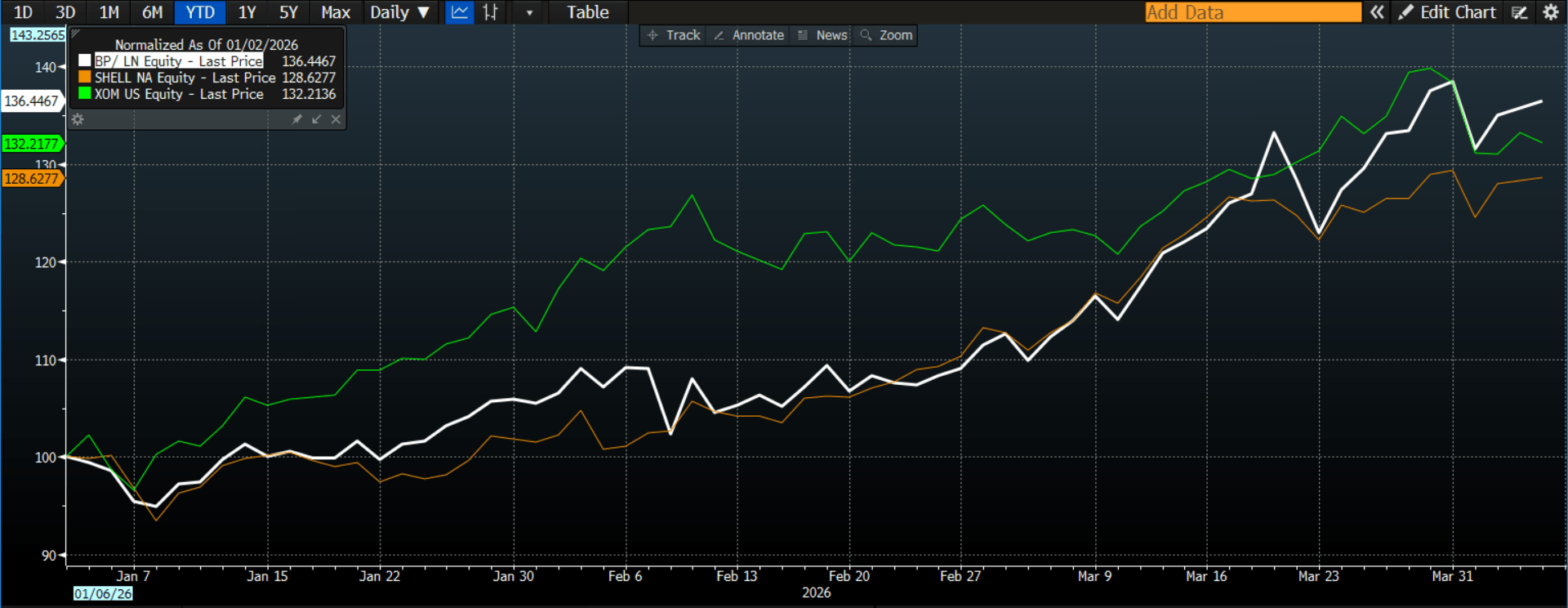
Source: XTB and Bloomberg
Sectors such as consumer staples, utilities and healthcare tend to see demand for their services and products remain stable during periods of economic uncertainty. Healthcare is one of the top performing sectors on the S&P 500, and it is higher by more than 7% in the past month, outperforming the overall US blue chip index.
Dividend paying stocks are also attractive, if a company can maintain their dividend during periods of geopolitical stress, then it can indicate financial strength and resilience. Dividend growth can help offset rising inflation and economic stagnation, which is why it is important to keep an eye on dividend payers in the current environment.
Dividend ‘Aristocrats’ in focus
The top dividend paying stocks in the US include Kraft Heinz and United Parcel Service. However, one of the best ways to analyse dividend stocks is to look at their longevity. The top dividend ‘aristocrat’ stocks, stocks that have increased dividends for over 25 years or more, in the US include Target, T Rowe Price Group, Sysco, and Becton Dickinson & co.
In the UK, the top dividend paying stocks in the FTSE 100 include Legal & General, with a forward yield of nearly 8%, M&G, Land Securities, HSBC, Shell and British American Tobacco. The last three companies deliver the largest absolute sums of cash back to investors, with HSBC set to distribute £10.7bn this year, Shell expected to pay out £6.3bn and BATS forecast to pay £5.3bn.
After suspending its share buyback programme in February on the back of a weak oil price, the prospect of BP reinstating its programme along with more sweeteners for investors, including an increase in the dividend, are surely on the cards when BP next announces results on 28th April.
Pepsi goes flat
Not every company that is expected to do well in a high inflation environment will do well. While a company may look like a good option on paper, PepsiCo, the consumer staples company which one might assume would be inflation-proof, is a warning sign. Its share price has fallen 2% in the past month after it recently announced that it would embark on a price review to boost sales. It announced that it was cutting prices earlier this year after a sales slump, particularly in its chips and salty snacks division.
This was a result of actions taken during the last period of high inflation in 2022-23. Back then it ramped up the prices of its snacks division, to the point where a pack of Doritos now costs $7! This caused sales to slump at its Frito-Lay brand, they even turned negative after missing internal revenue targets for 2 years in a row. This leaves PepsiCo in a weak position with no pricing power in a high inflation environment. Some may argue that it is misfortune caused by past greedy policies, however, it is hard to see them weathering the coming economic storm.
Chart 2: PepsiCo North America Sales growth rate slumped after ramping up costs
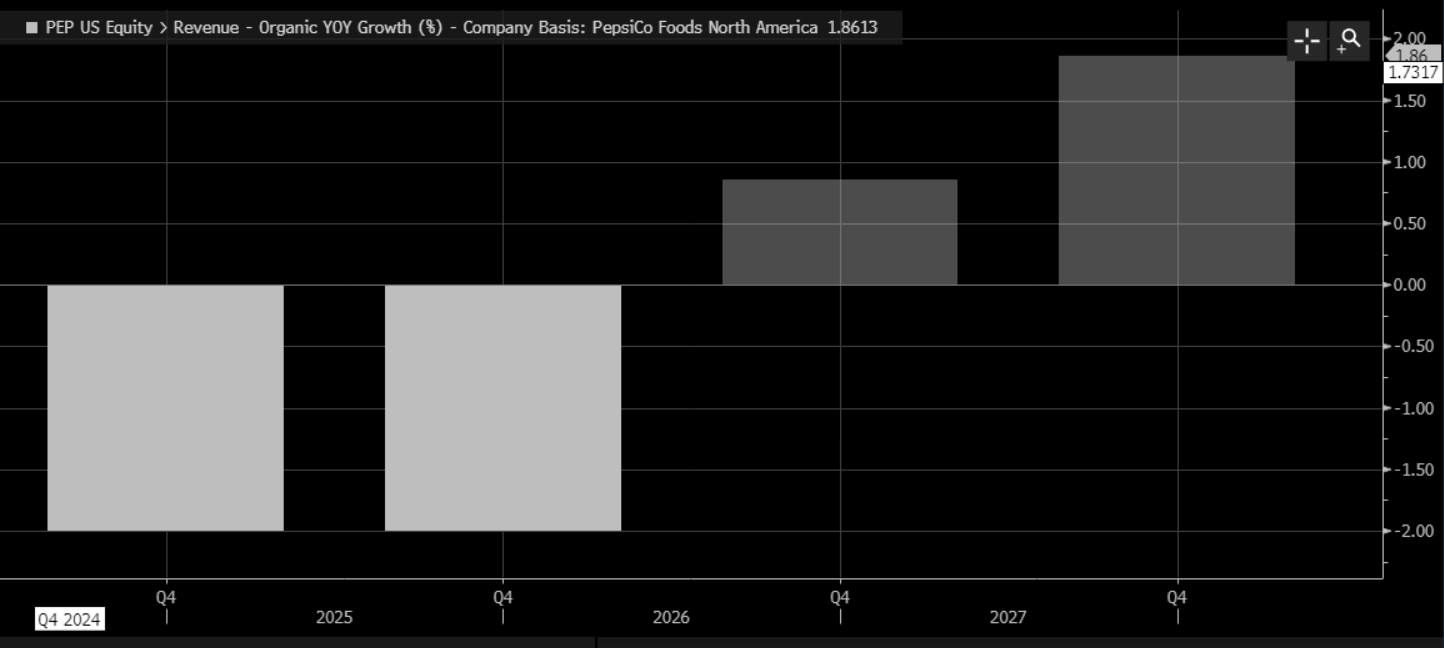
Source: XTB and Bloomberg
As you can see, investors need to be vigilant during periods of high inflation. There is no magic formula to protect your portfolio, and it pays to be skeptical even when a sector has a track record of outperformance during periods of high inflation.


Daily summary: Wall Street pares early loses awaiting Trump's final decision on Iran strike 🗽(07.04.2026)

Fed Goolsbee warns on the stagflation risk in the US 📊


Cocoa slumps 7% amid stronger US dollar and weakening demand 📉

NY Fed survey signals inflation spike in the US🗽EURUSD at 15.7
This content has been created by XTB S.A. This service is provided by XTB S.A., with its registered office in Warsaw, at Prosta 67, 00-838 Warsaw, Poland, entered in the register of entrepreneurs of the National Court Register (Krajowy Rejestr Sądowy) conducted by District Court for the Capital City of Warsaw, XII Commercial Division of the National Court Register under KRS number 0000217580, REGON number 015803782 and Tax Identification Number (NIP) 527-24-43-955, with the fully paid up share capital in the amount of PLN 5.869.181,75. XTB S.A. conducts brokerage activities on the basis of the license granted by Polish Securities and Exchange Commission on 8th November 2005 No. DDM-M-4021-57-1/2005 and is supervised by Polish Supervision Authority.
