

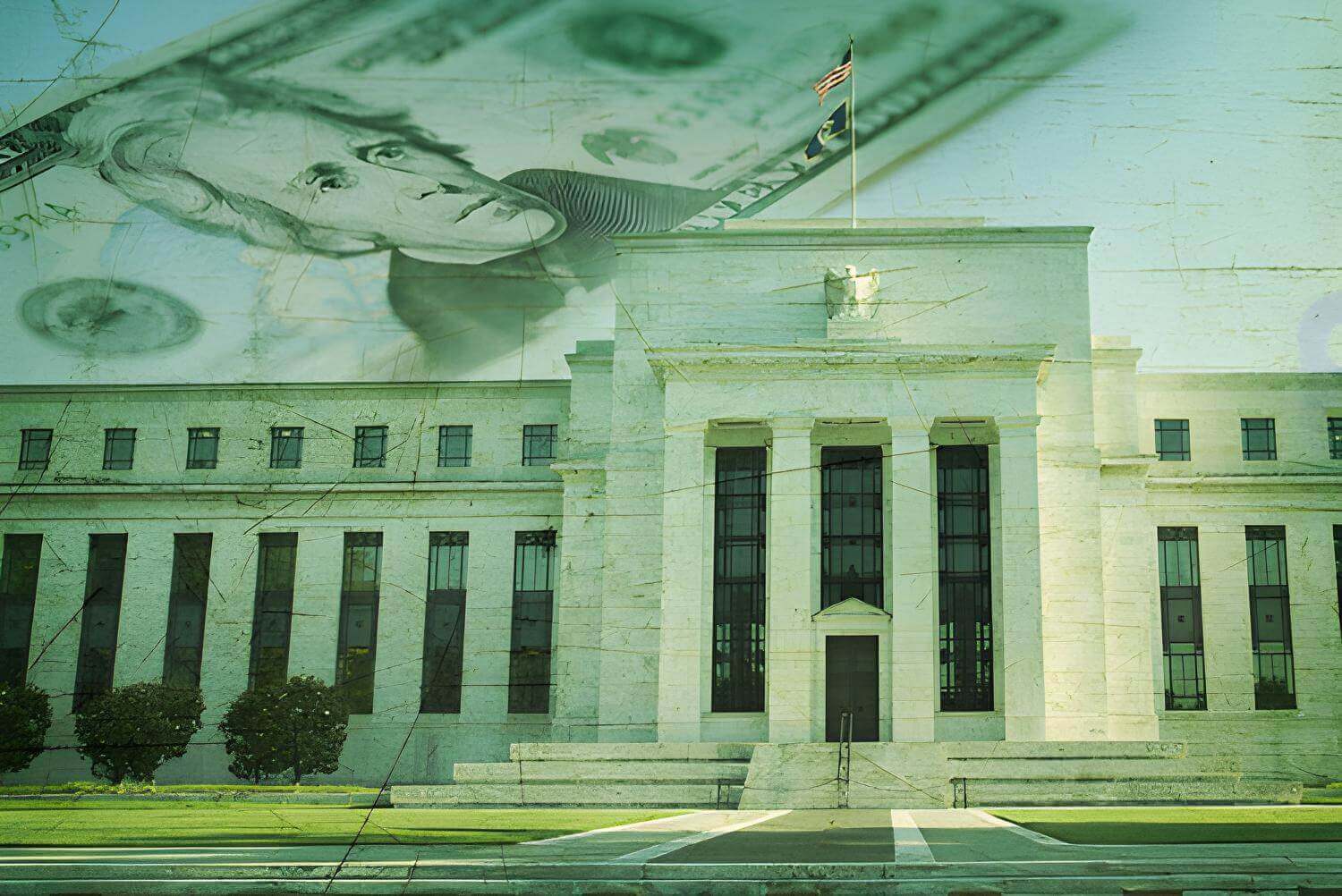
Today’s hearing of Kevin Warsh before the Senate carried a clearly political weight, not just an economic one. The nominee for Fed Chair tried, on the one hand, to present himself as a supporter of a strong, credible, and independent Federal Reserve, and on the other hand as someone who wants a deep change in how it operates. A central theme of his testimony was criticism of the Fed’s current communication and policy framework, especially regarding forward guidance, the size of its balance sheet, and its interpretation of inflation. At the same time, the issue of political independence stood out very strongly, as Warsh had to respond to concerns that he could be too close to Donald Trump and potentially act under his influence.
Below are the key quotes from his testimony today, along with context.
"I will not be a tool of the president"
Warsh strongly emphasized that he would not act as a “tool” of the presidential administration.This was a direct response to concerns from some senators that, as Donald Trump’s nominee, he could be subject to political pressure in decisions regarding interest rates. In his narrative, Fed independence remains a core principle.
"I would not agree to pre-set interest rates or commitments"
He stated that he would never agree to predetermined interest rate decisions. This reinforces his message that monetary policy should remain flexible and data-driven, rather than shaped by political expectations.
"The Fed should remain strictly independent"
Warsh repeatedly stressed that the Federal Reserve must remain fully independent from the White House. At the same time, he attempted to balance this message with earlier proposals suggesting more coordination in certain areas of economic policy.
"Fed should collaborate with government beyond monetary policy."
He suggests greater coordination between government institutions, although his broader message still emphasizes a clear separation between fiscal and monetary responsibilities.
"I don't believe in forward guidance"
One of his most consistent positions. He argues that publicly signaling the future path of interest rates reduces the Fed’s flexibility and can distort market expectations.
"The data being used today is imperfect"
He criticizes the quality of inflation and macroeconomic data, suggesting that the current measurement system does not fully capture underlying price pressures.
"We need a new inflation framework"
He calls for a redesign of how inflation is analyzed, implying a shift away from existing models toward more modern and dynamic approaches.
"The Fed has been too focused on one-off shocks"
In his view, the Fed has too often reacted to short-term price fluctuations rather than focusing on persistent inflation trends.
"A smaller balance sheet would improve policy transmission"
Warsh argues that the current size of the Fed’s balance sheet distorts the transmission of monetary policy and may lead to unintended economic consequences.
"Digital assets are part of the financial system"
He emphasizes that digital assets are now a permanent part of the financial system and cannot be ignored in macroeconomic analysis.
"The economy is changing on the supply side in a dramatic way"
He highlights that the economy is undergoing a structural transformation, largely driven by technology and artificial intelligence, which makes traditional economic models harder to apply.
In a broader sense, Warsh is trying to combine two narratives that partially sit in tension with each other. On one hand, he strongly defends the independence of the Fed and rejects suggestions that he could be politically controlled by Donald Trump. He explicitly pushed back against concerns that he might be “controlled” by the president, stressing that interest rate decisions would be made solely based on data and within the institutional independence of the central bank. On the other hand, his reform agenda clearly fits into a broader debate about changing the Fed’s direction: reducing the role of forward guidance, increasing flexibility, rethinking the inflation framework, and shrinking the importance of the balance sheet.
As a result, his testimony can be seen as an attempt to position himself more as an institutional reformer than a continuation of the current Fed approach. At the same time, the key political question remains whether his stated independence will convince senators who are concerned about the politicization of the central bank in the context of strong presidential pressure for interest rate cuts.



Daily Summary: As a ceasefire drifts away, markets lose ground



US Open: Macro Up, Tensions Down!



Defense sector earnings: RTX, Thales and Northrop Grumman

BREAKING: U.S. sales above expectations!
The content of this report has been created by XTB S.A., with its registered office in Warsaw, at Prosta 67, 00-838 Warsaw, Poland, (KRS number 0000217580) and supervised by Polish Supervision Authority ( No. DDM-M-4021-57-1/2005). This material is a marketing communication within the meaning of Art. 24 (3) of Directive 2014/65/EU of the European Parliament and of the Council of 15 May 2014 on markets in financial instruments and amending Directive 2002/92/EC and Directive 2011/61/EU (MiFID II). Marketing communication is not an investment recommendation or information recommending or suggesting an investment strategy within the meaning of Regulation (EU) No 596/2014 of the European Parliament and of the Council of 16 April 2014 on market abuse (market abuse regulation) and repealing Directive 2003/6/EC of the European Parliament and of the Council and Commission Directives 2003/124/EC, 2003/125/EC and 2004/72/EC and Commission Delegated Regulation (EU) 2016/958 of 9 March 2016 supplementing Regulation (EU) No 596/2014 of the European Parliament and of the Council with regard to regulatory technical standards for the technical arrangements for objective presentation of investment recommendations or other information recommending or suggesting an investment strategy and for disclosure of particular interests or indications of conflicts of interest or any other advice, including in the area of investment advisory, within the meaning of the Trading in Financial Instruments Act of 29 July 2005 (i.e. Journal of Laws 2019, item 875, as amended). The marketing communication is prepared with the highest diligence, objectivity, presents the facts known to the author on the date of preparation and is devoid of any evaluation elements. The marketing communication is prepared without considering the client’s needs, his individual financial situation and does not present any investment strategy in any way. The marketing communication does not constitute an offer of sale, offering, subscription, invitation to purchase, advertisement or promotion of any financial instruments. XTB S.A. is not liable for any client’s actions or omissions, in particular for the acquisition or disposal of financial instruments, undertaken on the basis of the information contained in this marketing communication. In the event that the marketing communication contains any information about any results regarding the financial instruments indicated therein, these do not constitute any guarantee or forecast regarding the future results.
