


The two-week suspension of U.S. military operations against Iran triggered a sharp shake-up in the FX market today, reversing much of the movement seen in recent weeks. Across a broad range of currencies, cyclical currencies are the most actively bought, with the NZD, SEK, and ZAR leading the way, while the USD and CAD are at the very bottom of the strength rankings. Pairs such as NZDUSD, AUDUSD, and GBPUSD are rebounding sharply, benefiting from the simultaneous rise in U.S. index futures and the steep sell-off in oil following the largest one-day drop in crude prices in years. The dollar index is sliding by about 0.9%, which, amid a sharp rebound in risk appetite on the stock markets, is weakening demand for safe-haven assets and pushing defensive positions in the USD—and to some extent in the JPY—to the sidelines.
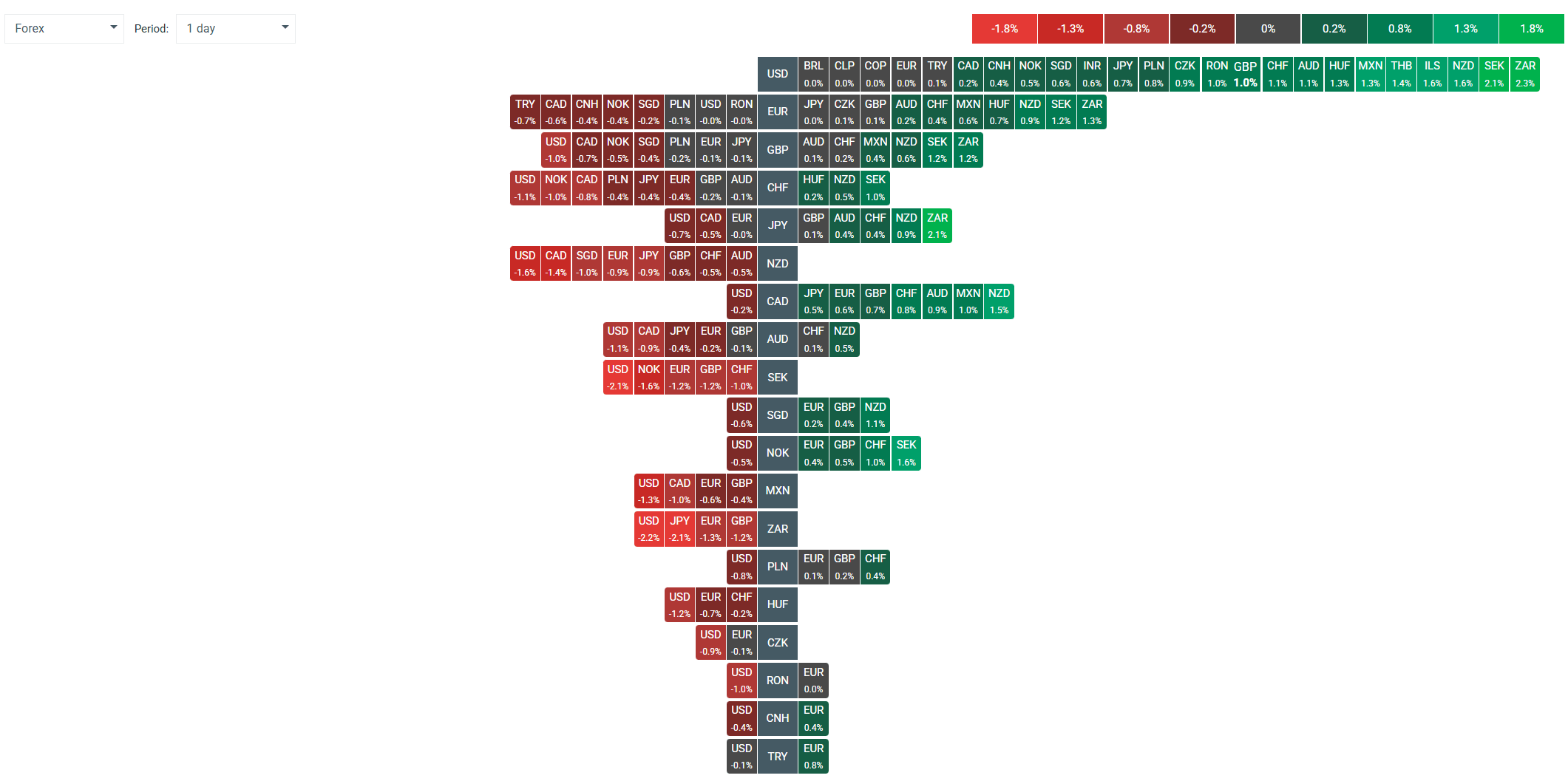
Today’s reaction follows the pattern seen in recent weeks, in which shifts in the intensity of the conflict with Iran quickly translate into movements among the dollar, the yen, oil, and gold, increasing volatility in major currency pairs. Above is a heatmap of volatility in the FX market. Source: xStation
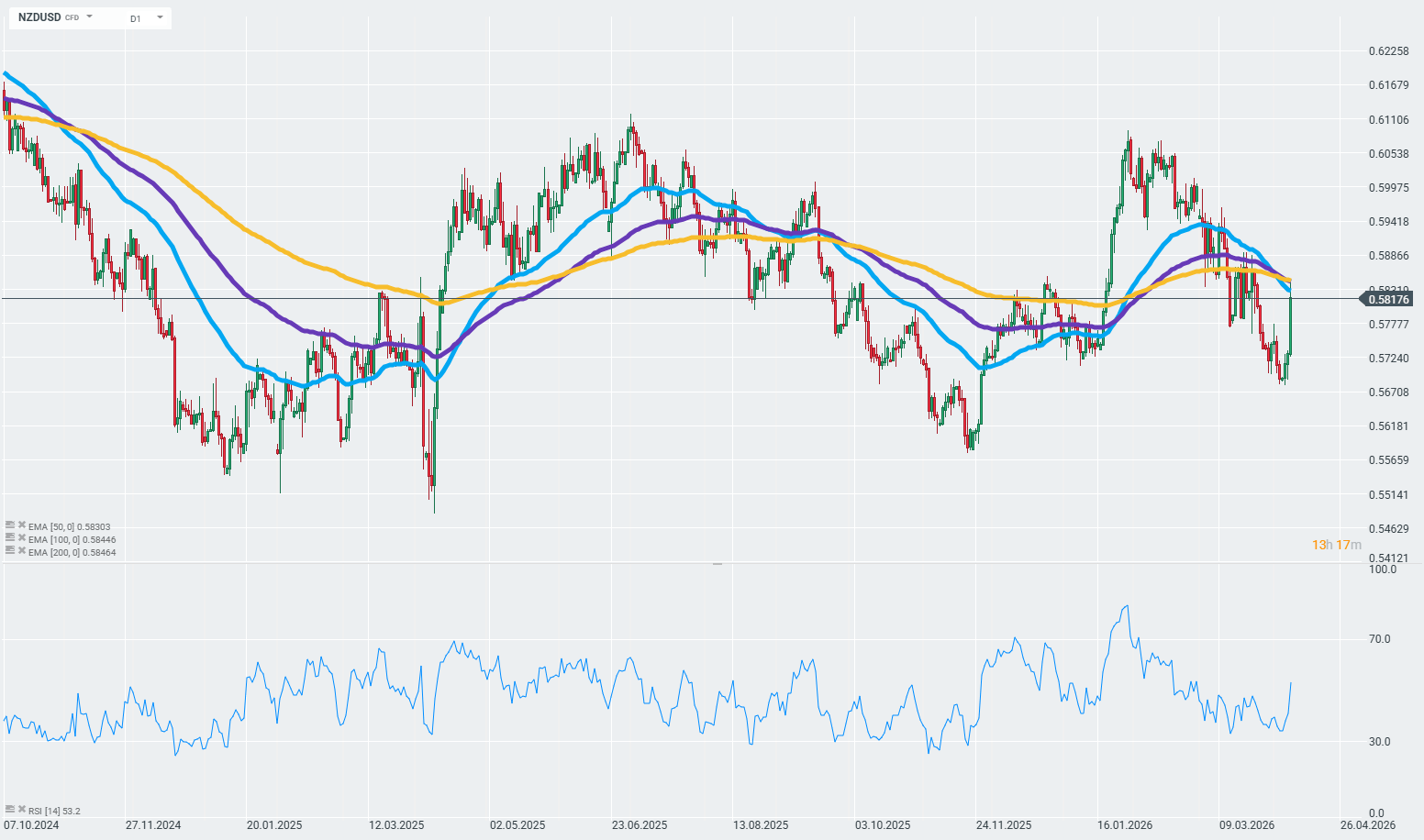
However, the biggest beneficiary of today’s combination of a hawkish central bank and global de-escalation remains the kiwi: following the RBNZ’s decision, NZD/USD rose temporarily by as much as 2% to around 0.5844, and is currently holding gains of around 1.7% at an exchange rate of approximately 0.5824. Investors interpreted the bank’s statement as a “hawkish pause”—the RBNZ clearly signaled its readiness for rapid rate hikes if inflation spreads beyond the energy sector and begins to affect wages and price expectations. At the same time, the bank emphasized that the supply shock linked to the earlier rise in oil prices is temporary, and that weaker domestic demand and rising spare capacity limit the risk of a second round of inflation. In this environment, the NZD benefits in two ways—as a currency with a relatively high interest rate premium and as a classic representative of the risk-on basket, which is now returning to favor following the suspension of U.S.-Iran hostilities. If the window for peace talks in Islamabad does not close too abruptly, the NZD’s current edge over the USD may hold, though ongoing instability in the region and the risk of a sudden escalation still call for caution when extending positions.
The NZDUSD pair tested an important long-term control point marked by the 200-day EMA today. The retest has so far proved unsuccessful.
Source: xStation



Gold surges 2% amid weakening US Dollar 📈


NZDUSD: hawkish RBNZ decision and TACO trade support the NZD 🚀


Oil plunges 10% 📉


Euphoria enters stock market amid ceasefire in the Middle East 📈US100 surges 3%
The content of this report has been created by XTB S.A., with its registered office in Warsaw, at Prosta 67, 00-838 Warsaw, Poland, (KRS number 0000217580) and supervised by Polish Supervision Authority ( No. DDM-M-4021-57-1/2005). This material is a marketing communication within the meaning of Art. 24 (3) of Directive 2014/65/EU of the European Parliament and of the Council of 15 May 2014 on markets in financial instruments and amending Directive 2002/92/EC and Directive 2011/61/EU (MiFID II). Marketing communication is not an investment recommendation or information recommending or suggesting an investment strategy within the meaning of Regulation (EU) No 596/2014 of the European Parliament and of the Council of 16 April 2014 on market abuse (market abuse regulation) and repealing Directive 2003/6/EC of the European Parliament and of the Council and Commission Directives 2003/124/EC, 2003/125/EC and 2004/72/EC and Commission Delegated Regulation (EU) 2016/958 of 9 March 2016 supplementing Regulation (EU) No 596/2014 of the European Parliament and of the Council with regard to regulatory technical standards for the technical arrangements for objective presentation of investment recommendations or other information recommending or suggesting an investment strategy and for disclosure of particular interests or indications of conflicts of interest or any other advice, including in the area of investment advisory, within the meaning of the Trading in Financial Instruments Act of 29 July 2005 (i.e. Journal of Laws 2019, item 875, as amended). The marketing communication is prepared with the highest diligence, objectivity, presents the facts known to the author on the date of preparation and is devoid of any evaluation elements. The marketing communication is prepared without considering the client’s needs, his individual financial situation and does not present any investment strategy in any way. The marketing communication does not constitute an offer of sale, offering, subscription, invitation to purchase, advertisement or promotion of any financial instruments. XTB S.A. is not liable for any client’s actions or omissions, in particular for the acquisition or disposal of financial instruments, undertaken on the basis of the information contained in this marketing communication. In the event that the marketing communication contains any information about any results regarding the financial instruments indicated therein, these do not constitute any guarantee or forecast regarding the future results.
