



The U.S. Securities and Exchange Commission (SEC) has opened the door to broader trading in “tokenized equities.” In a sense, this breakthrough decision reinforces a sentiment that has been building for months around expectations of integrating digital assets with the traditional capital market.
The September 17 decision came after further work on the CLARITY Act was blocked in the Senate. An administrative path to reform allows market liberalization to continue, but leaves investors with greater uncertainty about how durable the new rules will be.
- The new mechanism provides five-year, conditional exemptions from some regulatory requirements for “tokenized equity trading platforms” and “liquidity providers.”
- The “tokens” are intended to grant rights equivalent to traditional securities, including access to dividends and voting. Crucially, however, issuers may object to having their shares admitted to such trading. The framework excludes synthetic instruments that only track a share price.
- The scale of implementation remains experimental. The SEC anticipates limits on the number of instruments and on volume, disclosure obligations, and various technological safeguards. The regulatory changes are justified mainly by the economic potential of tokenization. As supporters of tokenized asset systems argue, they can streamline settlement, reduce servicing costs, and broaden access to liquidity.
Ultimately, all of this is meant to strengthen the financial system and support productive investment. However, realizing this potential still depends on issuers and market participants.
Bitcoin regains momentum
BITCOIN (D1) Chart
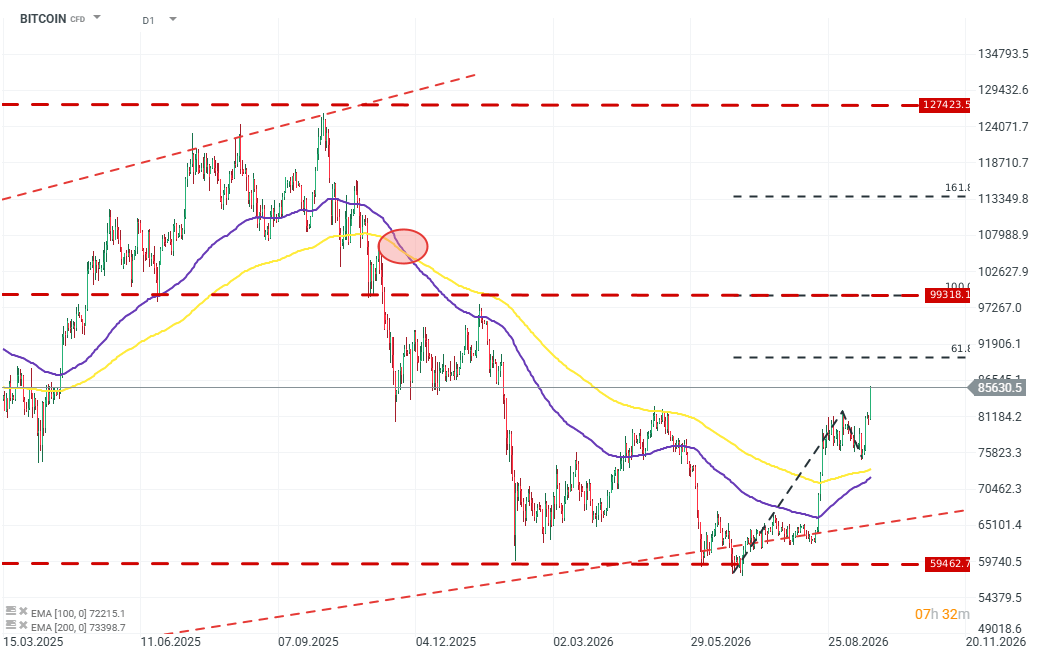
News of broader tokenization integration primarily supports cryptocurrencies and companies linked to their trading. On September 21, Bitcoin reached around USD 85,000, its highest level since January.
Among companies, Strategy shares rose 8%, while Coinbase and Robinhood gained 5%.
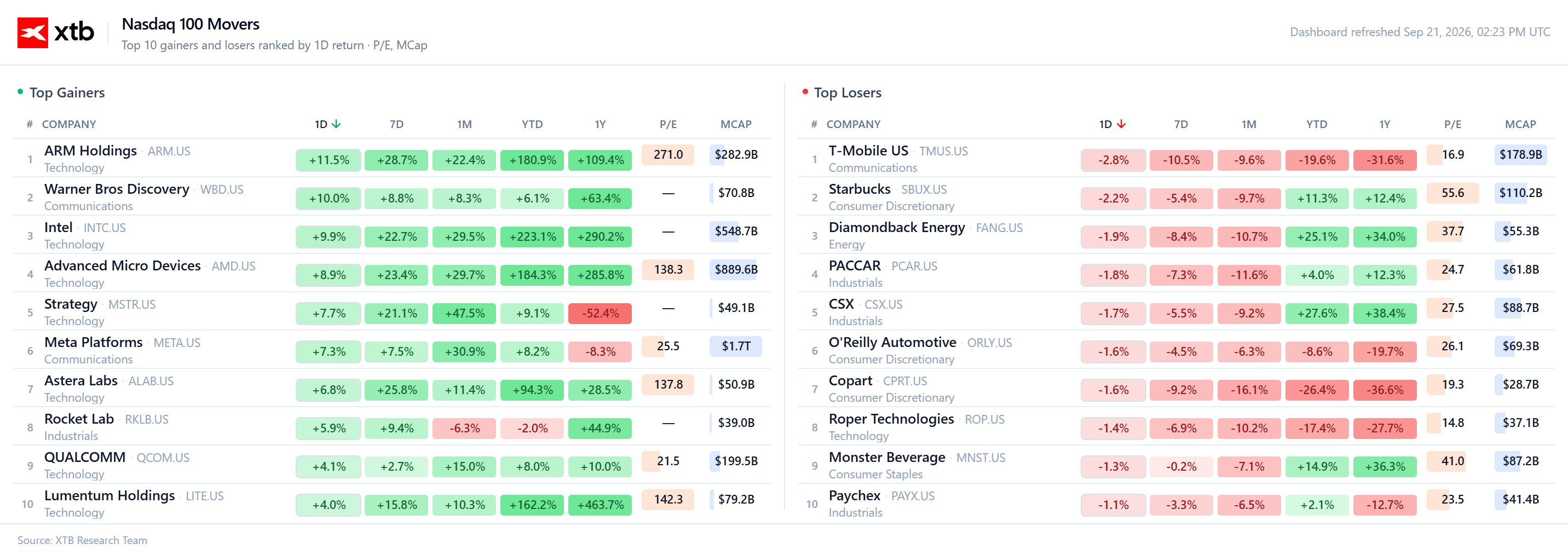
Attributing the entire move to the SEC decision would be an oversimplification. The market was also supported by inflows into Bitcoin ETFs and short covering. The regulatory boost also coincided with a moderate improvement in broader market sentiment, making it difficult to isolate the growth contribution for the assets mentioned in today’s session.
Importantly, tokenization’s relevance to Bitcoin is indirect. Wider blockchain use by financial institutions can increase acceptance of the whole asset class and willingness to allocate capital. Trading tokenized equities itself does not require a proportional increase in BTC purchases.
Strategy increases exposure to the rebound
Strategy benefits not only from Bitcoin price moves but also from a wave of fundamental news. The “treasury” type company reported buying another 950 bitcoin for USD 75.7 million, increasing its holdings to 846,000 BTC.
With a portfolio of that size, a USD 1,000 increase in the cryptocurrency price raises its gross value by about USD 846 million.
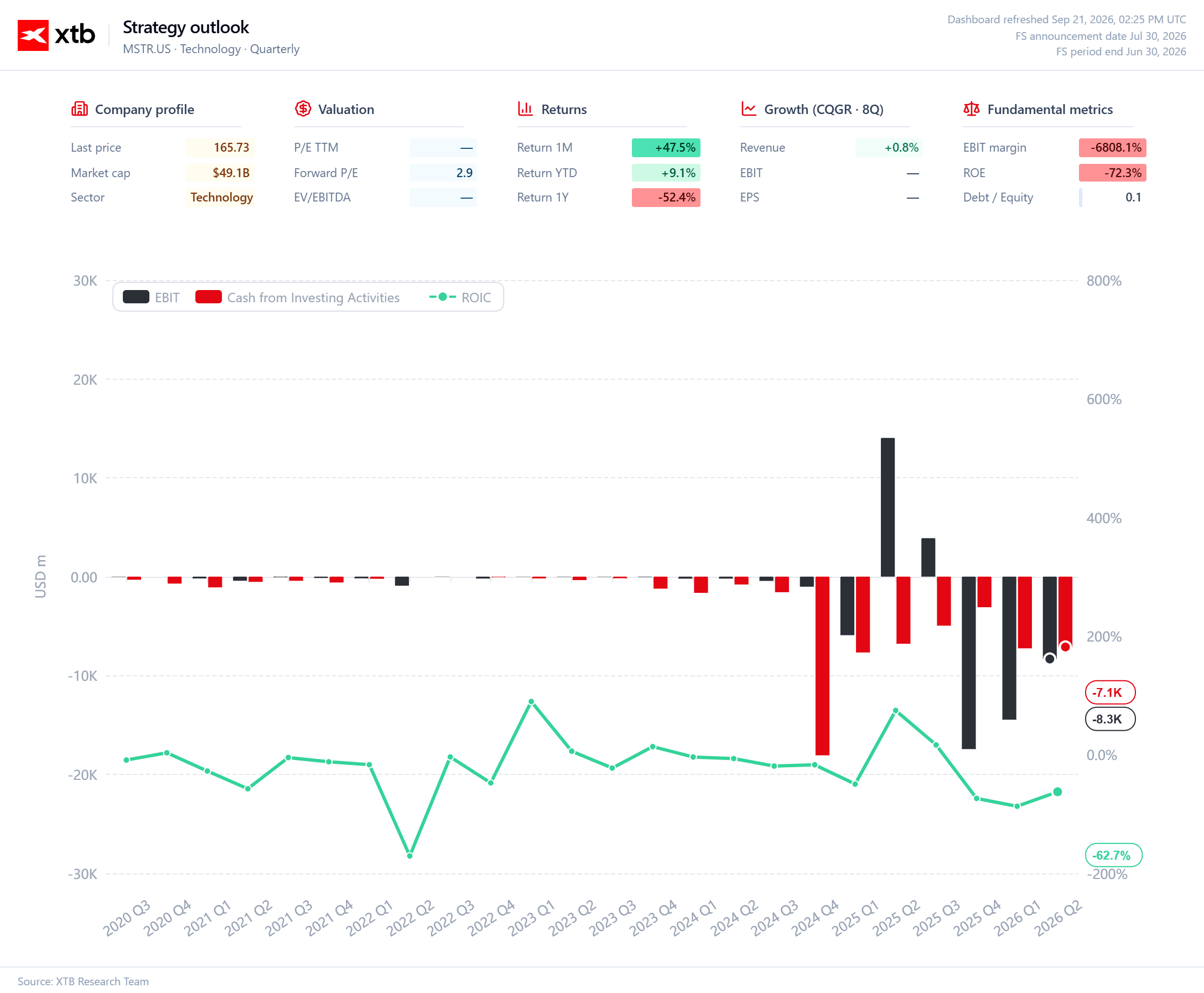
From a valuation perspective, the funding channel also matters. If a rise in Strategy’s share price increases its premium to net asset value attributable to common shareholders, share issuance can make further BTC accumulation easier. The benefit for existing investors depends on the issuance price, dilution, and the company’s obligations. A decline in that premium weakens the mechanism even if Bitcoin remains stable.


Marvell: Memory-market problems and opportunities


⛩️Chart of the Day: JP225, Nikkei Plays Its Own Tune (01.10.2026)



Morning Wrap: Tech Rally in Asia Following Micron Results and Weakening Yen Despite Hawkish BoJ


Record after record: Micron smashes Q4 results, server overload crashes website, stock surges post-market