


- Brent crude drops below 100 USD per barrel following the US midterm elections.
- Democrat control of Congress increases pressure on the administration to end the Iran conflict.
- JPMorgan estimates the global oil market returned to a supply surplus in October.
- The S&P 500 Energy index falls by nearly 5 percent amid the broader sell-off.
- Traders remain divided on whether geopolitical risks will drive further price drops.
Crude oil prices fall sharply following the US midterm elections, with Brent crude dropping below the psychological $100 per barrel mark for the first time since early October.
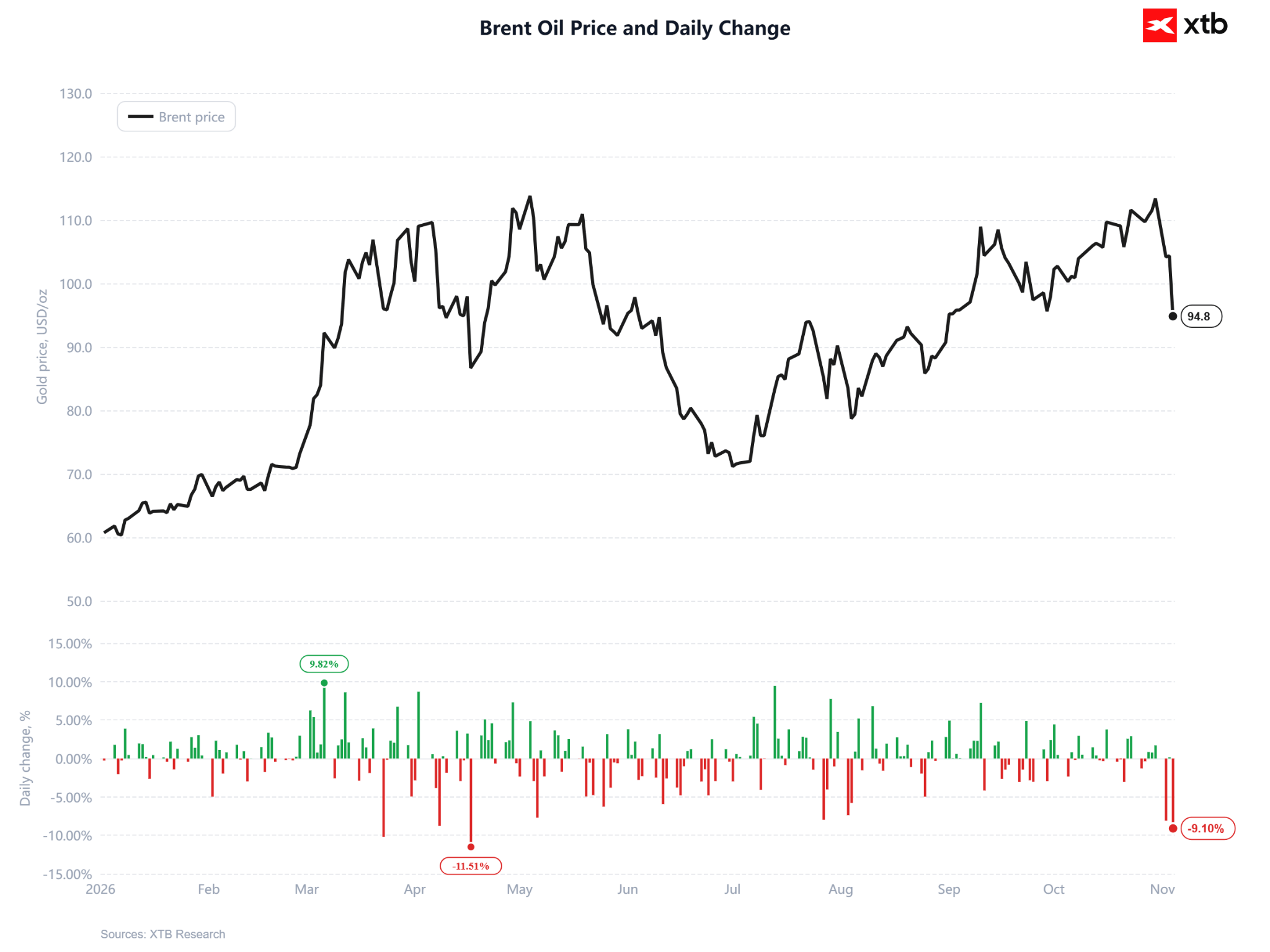
- Brent drops more than 9% towards $95/bbl, while WTI falls over 8% to around $88/bbl
- The sell-off accelerated after a post by Vice President JD Vance, who explicitly blamed the war with Iran for the Republicans' election loss
- Democrats gained control of both houses of Congress, increasing pressure on the Trump administration to seek an end to the conflict
- President Trump signaled no near-term plans to escalate against Iran, which the market interprets as a step toward a diplomatic resolution
- Oil flows through the Strait of Hormuz remain near pre-war levels, and according to JPMorgan estimates, the global oil market returned to a supply surplus (approx. 1.4 million barrels per day in October)
- Energy stocks are also declining – the S&P 500 Energy index falls by nearly 5%, with sharp losses seen in Marathon Petroleum, Valero, and APA, among others
However, the market is divided on the sustainability of this move. Some traders point out that the electoral defeat limits Trump's room for maneuver regarding Iran and increases pressure for a real deal, which should support further price declines. Others note that the election humiliation might actually prompt the administration toward more decisive actions against Tehran to demonstrate strength, presenting an upside risk factor. Brent has gained around 70% this year amid supply disruptions from the Persian Gulf, so despite today's sell-off, the market still prices in an elevated geopolitical premium. Its future direction will depend on whether signals of potential US-Iran negotiations translate into concrete agreements. It is worth emphasizing, however, that American voters are sending Trump and the Republicans a clear warning sign. Ultimately, average US citizens care less about foreign policy and more about paying significantly higher prices for fuel than at the start of the year.
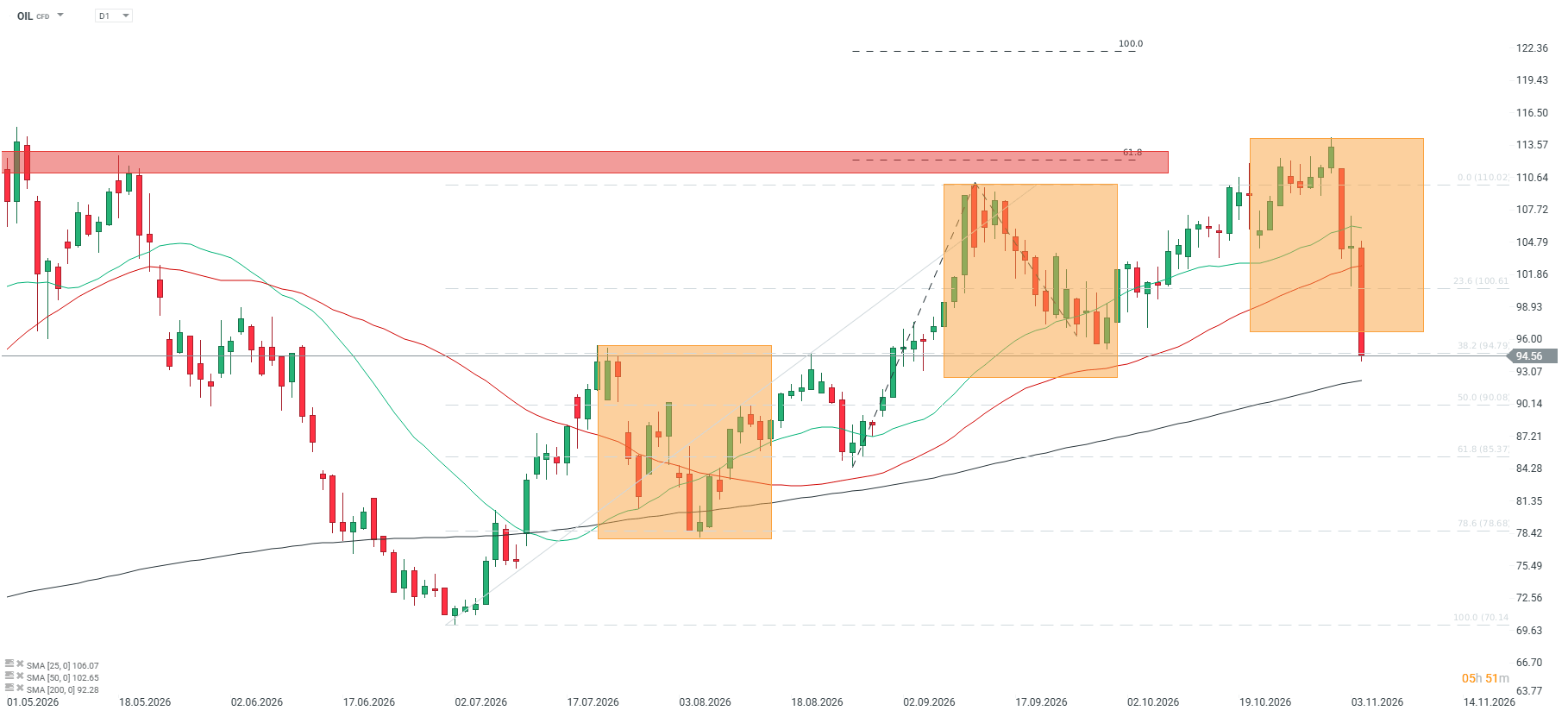 Brent crude retreats below $100 per barrel, and subsequently below $95, breaking below the early October lows. Support around the 38.2% Fibonacci retracement level of the latest upward move is currently being tested. A true trend reversal would require a drop below the 200-period moving average.



Market Wrap: Global stocks post 7th consecutive session of losses, Anthropic failed to reassure the market (20.11.2026)

Gold loses a third of its value. It's liquidity and the Fed, not peace in Shenzhen


Economic Calendar: Trump-Xi Jinping-Putin summit ongoing, time for Walmart results (19.11.2026)


Morning Wrap: Time for the largest stock market debut in history (19.11.2026)