


The most important factor driving the decline in the oil and gas market is a partial improvement in expectations regarding the transport of commodities from the Persian Gulf region.
Saudi Arabia increased oil exports in September to more than 4 million barrels per day versus around 2.4 million in August, and the market is also counting on a partial restoration of capacity on the East-West pipeline. CENTCOM leadership statements remain similarly optimistic, indicating that transfers have risen to the highest levels in six months.
There have also been hopes for diplomatic progress between the US and Iran. As a result, investors are reducing the risk premium linked to the conflict in the Middle East.
Even so, it should be remembered that production and shipping are still under constant pressure and the threat of shelling, and data, including on traffic through the Strait of Hormuz, remain inconsistent and limited.
- Oil is down about 3% today, and contracts are falling toward $100.
- European gas is also clearly cheaper, and the TTF benchmark has again fallen below EUR 80/MWh.
Investors are reducing the risk premium linked to the conflict in the Middle East.
OIL price chart (D1)
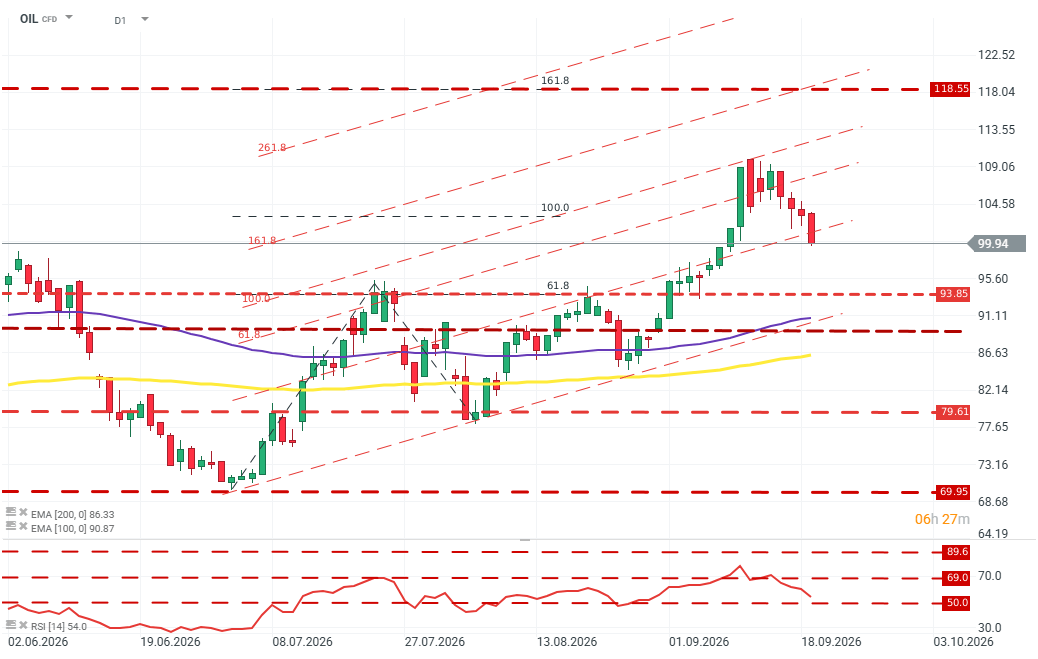
The oil price on the chart has already slipped by about 9% from the most recent peak, but the RSI [14] indicator is still above 50, and the first clear technical resistance can only be seen at the levels of the previous local peak around $94. Source: xStation5


Market Wrap: A 4% surge in oil prices weighs on indices (08.10.2026)

EURUSD falls below 1.12 amid hawkish Fed's Waller remarks


Chart of the Day 📉 DE40 Falls 0.7% and Tests Key Support Amid Weak European Market Sentiment (October 8, 2026)

Economic Calendar: U.S. Jobless Claims and ECB Meeting Minutes in Focus (08.10.2026)