


- The MSCI Asia Pacific index rose nearly 5%, reaching a three-week high
- US index futures gained more than 2.5%, while European contracts surged by 5.5%
- The dollar, previously a safe haven, weakened by 0.8%
- Treasuries advanced as markets resumed pricing in Fed rate cuts
Trump emphasized that a key condition of the ceasefire is maintaining fully open shipping through the Strait of Hormuz. During this period, both sides are expected to negotiate a 10-point peace plan proposed by Tehran. Israel confirmed it would align with the US decision, although reports of IDF strikes in southern Lebanon surfaced earlier in the day. It is also worth noting that Tehran’s proposal appears relatively maximalist, including demands such as the removal of all sanctions, full control and toll collection in the Strait of Hormuz, and continued uranium enrichment for civilian purposes. If Iran’s negotiating position proves particularly strong, markets could begin pricing in renewed conflict risk as early as next week.
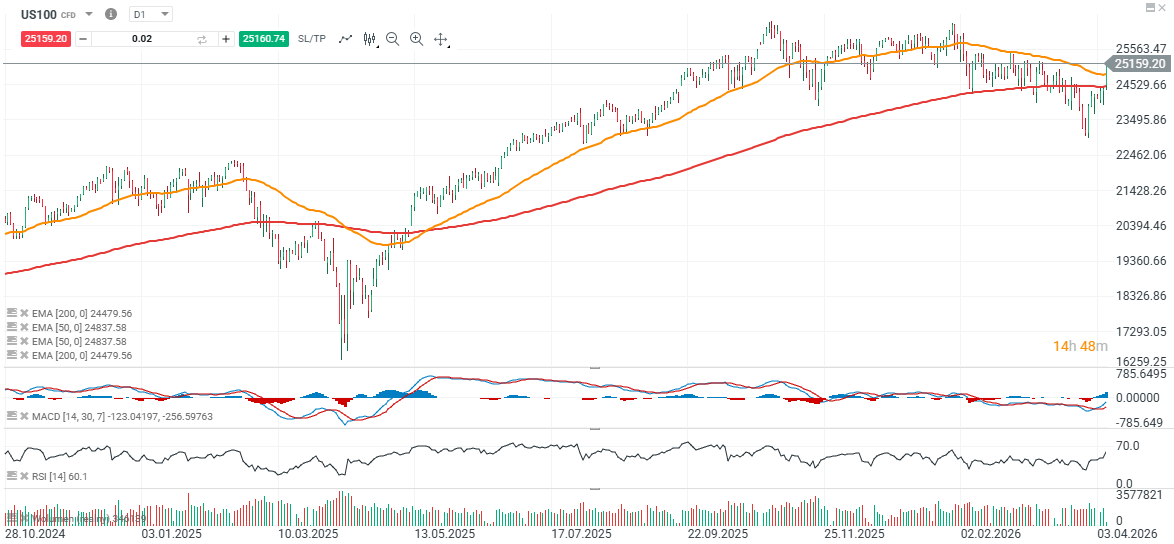
Falling oil prices are not only about lower energy costs—they also reinforce expectations of looser monetary policy and support for economic growth. Should a more durable peace in the Middle East come into view in the coming days, the recent correction in equity markets could indeed be reversed.
US100 and OIL charts (D1)
Source: xStation5



Gold surges 2% amid weakening US Dollar 📈



War-related shifts in the Forex market: USD plummets 💥; AUD, NZD and the CHF rebound 🚀
NZDUSD: hawkish RBNZ decision and TACO trade support the NZD 🚀


Oil plunges 10% 📉
