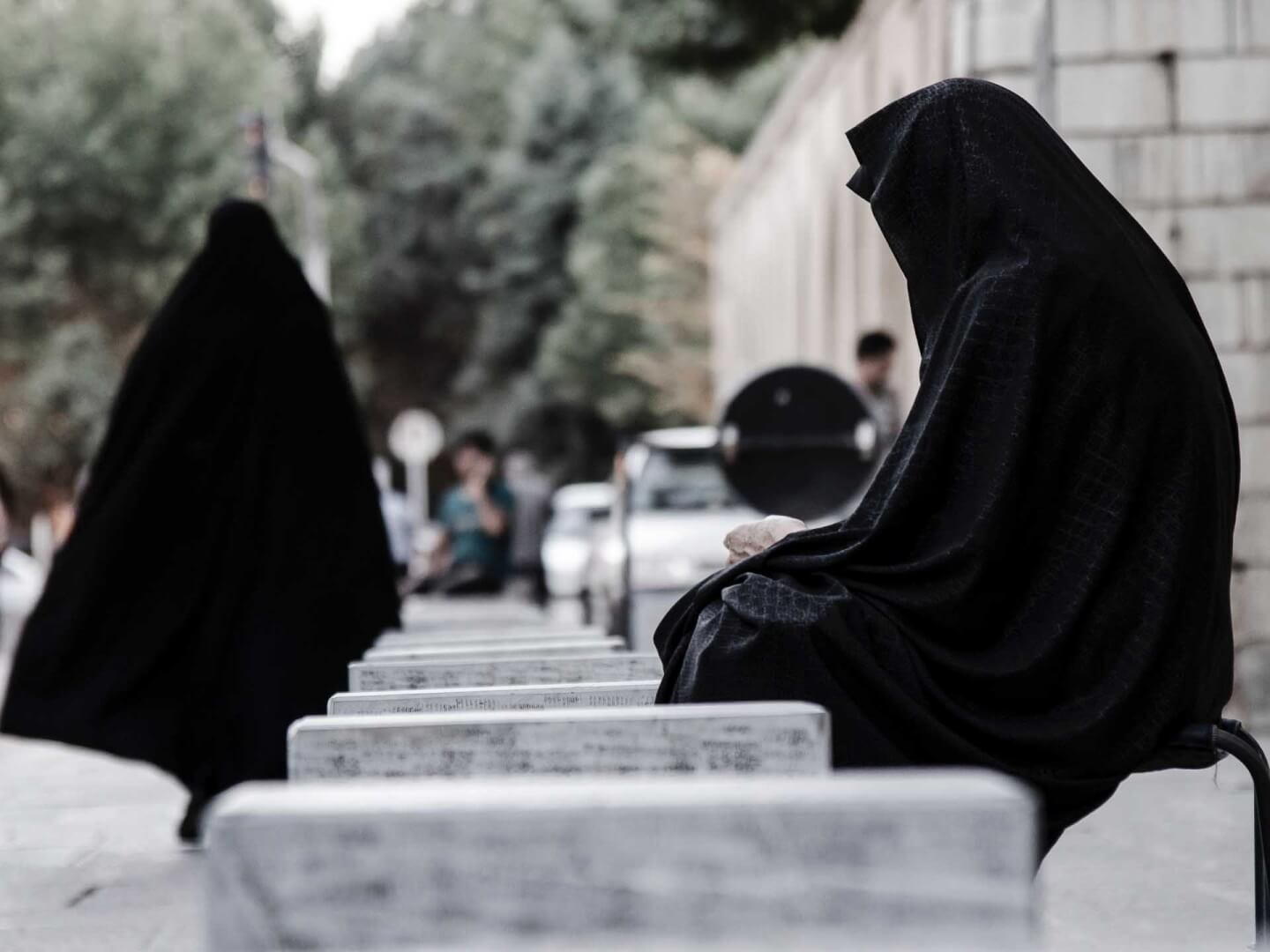
The situation in Iran and in the Strait of Hormuz remains heated, and the outlook for the conflict is extremely fluid and complex. It is becoming increasingly apparent that the American side, embodied by President Donald Trump, is not adequately prepared for conflict.
The conduct and statements coming from the United States reveal a significant degree of surprise and disorganization, if not desperation. This does not mean, however, that the Islamic Republic of Iran is in a comfortable position.
Iran’s “pain threshold” is several orders of magnitude higher than that of the United States. However, the question must be asked whether Iran’s economic, social, and institutional “buffer” is sufficient to offset the U.S. military advantage.
The answer is no, but that answer is not exhaustive.
A large part of public opinion and many analysts try to focus on the claim that, in modern history, it has never been possible to force a country’s capitulation solely or primarily through air strikes. The biggest problem with this view is that it is not a fact, but an anecdote lacking substantive foundations. Operations “Desert Storm,” “Unified Protector,” and “Allied Force” were precisely such operations, and they ended successfully with negligible losses on the coalition side.
It is important, however, that in those operations the United States had a much more liberal targeting policy than would be socially acceptable today. One of those “liberal” choices was striking water and electricity transmission infrastructure, both in Serbia and in Iraq. Fundamentalist regimes can fight for years, even without any chance of victory, but a person still dies without water after about three days. Iran is a desert, and a state whose population prior to industrialization and electrification in the 20th century hovered around 10 million, compared with today’s 90 million.
Both Tehran and the Pentagon are aware of these facts. The result is Trump’s latest threats and the alleged negotiations he is conducting with Iran. Given the chaotic and hermetic nature of both power centers, it is not possible to predict how events will unfold, but it is possible to outline the most likely scenarios.
The scenario that makes the most sense, and offers the greatest benefits, for Iran is to play for time. Feigned negotiations would allow the regime to consolidate its severely depleted military resources, address the most pressing social and economic problems, while simultaneously maintaining pressure on trade routes, counting on fuel prices and equity index declines to force Trump into a ceasefire on terms favorable to Iran. This would amount to a functional defeat for the United States, but it would allow for a gradual normalization of market conditions.
At the opposite end of the spectrum is a scenario of partial/conditional disarmament by Iran and the unblocking of the Strait of Hormuz. No disarmament agreement with Iran can be long-term given the nature of the regime in power, but ad hoc solutions may be necessary for Iran and sufficient for the United States. This would be a form of ceasefire and it would be difficult to call it a victory for either side, but it is the scenario currently preferred by the markets.
The scenario of maximum escalation would be Trump following through on his recent threats. The United States still has enormous capabilities to strike any targets across Iran; Iran, meanwhile, lacks the ability to stop the U.S. or even to regenerate its losses. This could cause destabilization in the region on a scale that is difficult to imagine, and a chain reaction with consequences that cannot be predicted.
This is a scenario that is extremely unfavorable for almost all parties, including financial markets. Such escalation would represent the maximum increase in kinetic pressure on Iran and would deprive the regime of any reasons for restraint in the measures it employs.
At the same time, even if the United States succeeded in bringing about the collapse of the Iranian state, it would only mean that instead of protecting the strait from the IRGC, it would have to be protected from potentially several groups with an operating profile and views similar to Yemen’s Houthis.
Kamil Szczepański - Junior Financial Markets Analyst, XTB



Trump drops Iran ultimatum 🚨 TACO turns the markets around 📈


Central Banks in the Grip of an Oil Shock: Hawkish BoJ and Defensive Rate Decisions in Europe

FOMC conference - Less members want cuts. EURUSD below 1.15
🔴BREAKING: Fed keeps interest rates unchanged. Keeps projection cuts.
This content has been created by XTB S.A. This service is provided by XTB S.A., with its registered office in Warsaw, at Prosta 67, 00-838 Warsaw, Poland, entered in the register of entrepreneurs of the National Court Register (Krajowy Rejestr Sądowy) conducted by District Court for the Capital City of Warsaw, XII Commercial Division of the National Court Register under KRS number 0000217580, REGON number 015803782 and Tax Identification Number (NIP) 527-24-43-955, with the fully paid up share capital in the amount of PLN 5.869.181,75. XTB S.A. conducts brokerage activities on the basis of the license granted by Polish Securities and Exchange Commission on 8th November 2005 No. DDM-M-4021-57-1/2005 and is supervised by Polish Supervision Authority.