

Recent information from Taiwan indicates that technological tensions between the United States and China are escalating further. Local authorities are investigating three individuals suspected of involvement in the illegal export of advanced servers used for the development of artificial intelligence. The equipment in question was manufactured by Super Micro Computer and is based on NVIDIA chips, which are subject to U.S. export restrictions. According to investigators, the hardware was allegedly routed to China through a network of intermediaries and the use of falsified trade documentation.
AI technology is becoming increasingly tied to geopolitics
The case is part of the broader technological conflict between Washington and Beijing. Over the past several years, the United States has steadily tightened restrictions on the export of the most advanced chips and AI infrastructure to China. U.S. officials argue that these technologies may be used not only for civilian applications but also for military purposes, including the development of autonomous systems and advanced cyber capabilities.
Ongoing pressure surrounding Super Micro
For Super Micro Computer, the latest reports add further pressure from both regulators and the market. This is not the first case linked to potential circumvention of U.S. export controls. Earlier, the U.S. Department of Justice reported an investigation into the alleged smuggling of AI-related technology worth up to 2.5 billion dollars. Prosecutors claim that servers were routed to China via intermediary countries in Asia, with export documentation allegedly altered to conceal their final destination.
Investors fear new restrictions on the technology sector
These developments are increasing investor concerns about the future of the global AI and semiconductor industry. Rising geopolitical tensions may lead to further tightening of export rules and greater oversight of strategic technology trade. Companies with significant exposure to the Chinese market remain particularly vulnerable, as China continues to play a key role in the global development of artificial intelligence despite ongoing restrictions.
Taiwan remains a key node in the semiconductor supply chain
This situation once again highlights Taiwan’s strategic importance in the global technology ecosystem. The island plays a central role in semiconductor manufacturing and advanced server infrastructure, placing it under growing pressure from both the United States and China. As a result, Taiwanese companies and institutions are increasingly involved in enforcing U.S. technology restrictions targeting Beijing.
Global AI competition is accelerating
The latest developments underline that artificial intelligence has become one of the most important arenas of global economic and political competition. For markets, this implies sustained volatility in the technology sector, particularly among chipmakers and AI infrastructure providers. Investors will now closely watch whether the investigation in Taiwan leads to additional sanctions or further tightening of export regulations targeting China.
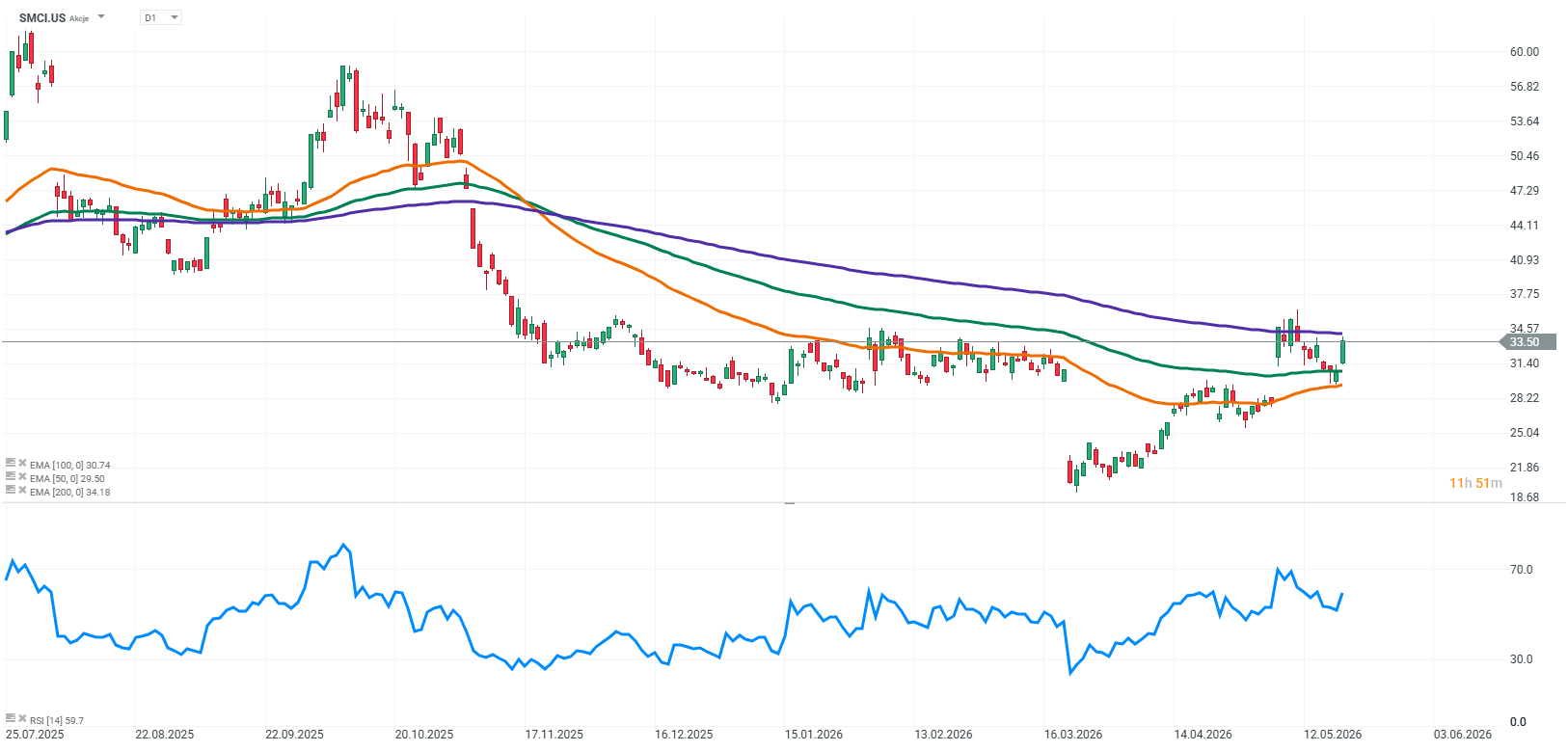
Source: xStation5



SpaceX IPO set for next month, as Nvidia shares, peace deal hopes and weak PMI data dominate sentiment


⚡ AMD will invest $10 billion in Taiwan to build AI infrastructure


Nvidia results overview
Nvidia’s report under the microscope 🔍. What do the numbers show?
This content has been created by XTB S.A. This service is provided by XTB S.A., with its registered office in Warsaw, at Prosta 67, 00-838 Warsaw, Poland, entered in the register of entrepreneurs of the National Court Register (Krajowy Rejestr Sądowy) conducted by District Court for the Capital City of Warsaw, XII Commercial Division of the National Court Register under KRS number 0000217580, REGON number 015803782 and Tax Identification Number (NIP) 527-24-43-955, with the fully paid up share capital in the amount of PLN 5.869.181,75. XTB S.A. conducts brokerage activities on the basis of the license granted by Polish Securities and Exchange Commission on 8th November 2005 No. DDM-M-4021-57-1/2005 and is supervised by Polish Supervision Authority.
