

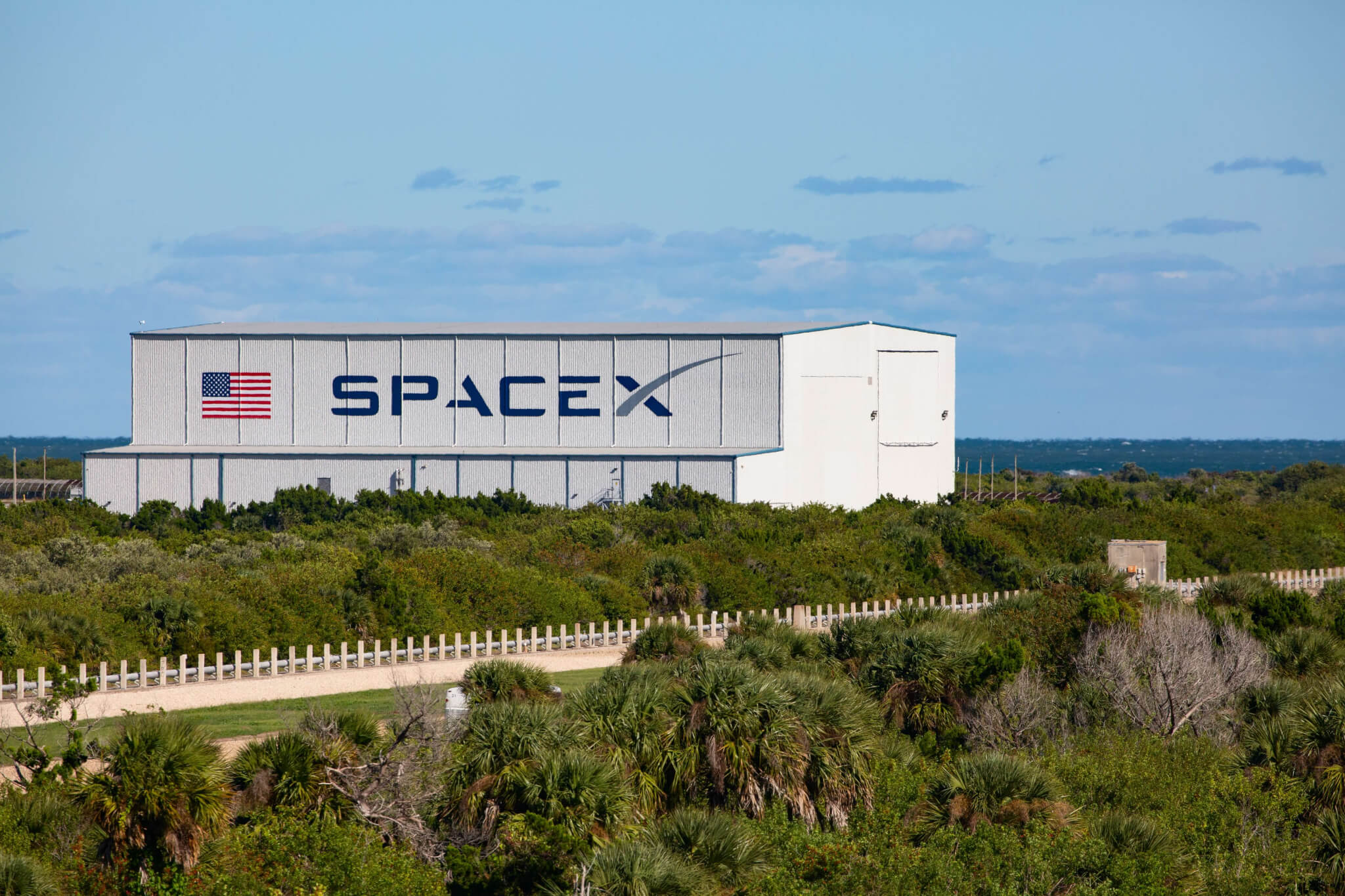

SpaceX is entering another earnings season facing a challenge it did not have to address so directly just a few years ago. Elon Musk can still talk about Mars, an artificial intelligence revolution, and the construction of infrastructure that could transform entire industries. But since going public, these ambitions have come with a tangible price tag, and investors want to know what they are getting in return for the billions being spent.
In the private markets, it was easier to assign value to the future. Belief in the founder’s vision, technological breakthroughs, and the potential to capture new markets was often enough. A publicly traded company has far less leeway to postpone questions about profitability. Revenue growth matters, but what matters even more is how much capital it takes to achieve that growth and whether the business can eventually stand on its own two feet.
Starlink remains SpaceX’s financial backbone, but its profits are becoming increasingly difficult to view as sufficient support for the entire group. The connectivity business generates cash, while space operations and AI consume enormous amounts of capital, with no certainty that they will achieve sustainable profitability. The larger these investments become, the greater the pressure on Starlink to do more than maintain growth: it must also fund increasingly expensive projects. In its third-quarter results, investors will therefore be looking for an answer to a key question: can SpaceX develop new businesses without continually increasing the burden on its only clearly profitable pillar?
Key Expectations
-
Third-quarter revenue: approximately $12.7 billion.
-
Total operating profit: approximately $200 million.
-
Connectivity segment, including Starlink and connectivity services: $4.45 billion in revenue and $1.66 billion in operating profit.
-
AI segment: $7.3 billion in revenue and an operating loss of $938 million.
-
Space segment: an expected operating loss of $525 million.
-
Launch activity: approximately 35 launches during the quarter, including 10 customer missions.
Full-year 2026 forecast: Connectivity is expected to generate $17.4 billion in revenue and $6.5 billion in operating profit. The Space segment is projected to deliver $3.4 billion in revenue while posting a $2.3 billion operating loss. Meanwhile, AI could generate $27.1 billion in revenue and an operating loss of $1.5 billion.
Starlink Is Profitable, but the Entire Group Remains Dependent on It
Starlink is now SpaceX’s financial backbone. Forecast quarterly revenue of $4.45 billion and operating profit of $1.66 billion demonstrate that connectivity services have a very different economic profile from rocket development or AI infrastructure. This is a business that can grow alongside its subscriber base, expanded coverage, and acquisition of corporate and public-sector customers. It is here that the link between increased scale and improved financial performance is most tangible.
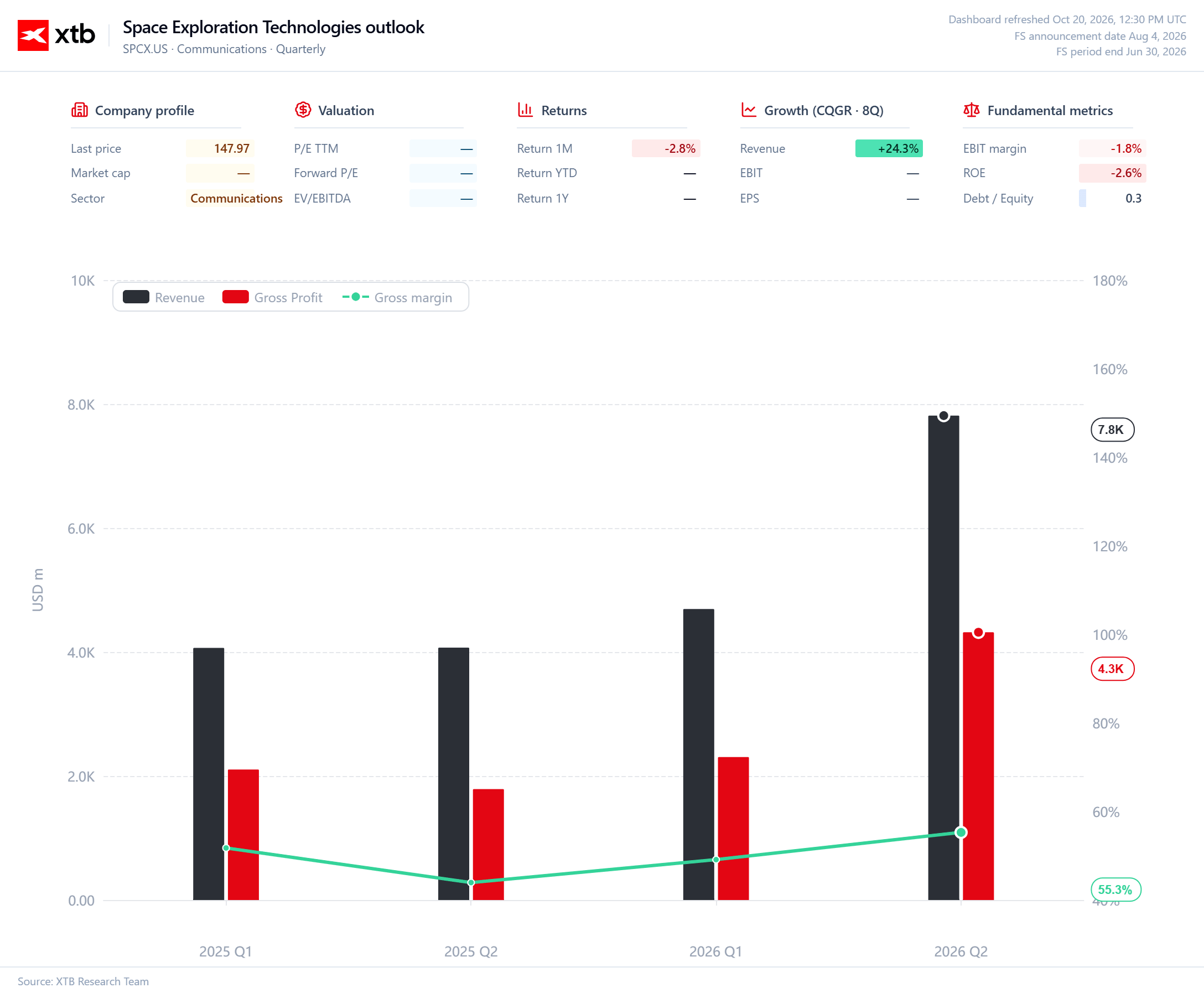
That does not mean SpaceX, as a whole, is in a comfortable position. Starlink’s profitability does not eliminate the costs of the group’s other ventures; it simply helps finance them. With the Connectivity segment projected to generate $6.5 billion in operating profit in 2026, it is expected to deliver a substantial surplus. At the same time, the Space segment could record an operating loss of $2.3 billion, with the AI segment adding another $1.5 billion in losses. Under this scenario, the group’s overall performance will depend not only on how quickly Starlink grows but also on how much capital Musk’s other ambitions consume.
Scalability Means More Than Rising Revenue
The key question is whether SpaceX can increase revenue faster than costs. A scalable business should eventually generate more profit from each additional unit sold without having to increase spending proportionally. For Starlink, this path could be driven by a growing user base, more efficient use of existing infrastructure, and the expansion of services for businesses and governments. Each additional customer could improve the economics of the business, although maintaining a competitive advantage will require further investment in satellites, terminals, and network capacity.
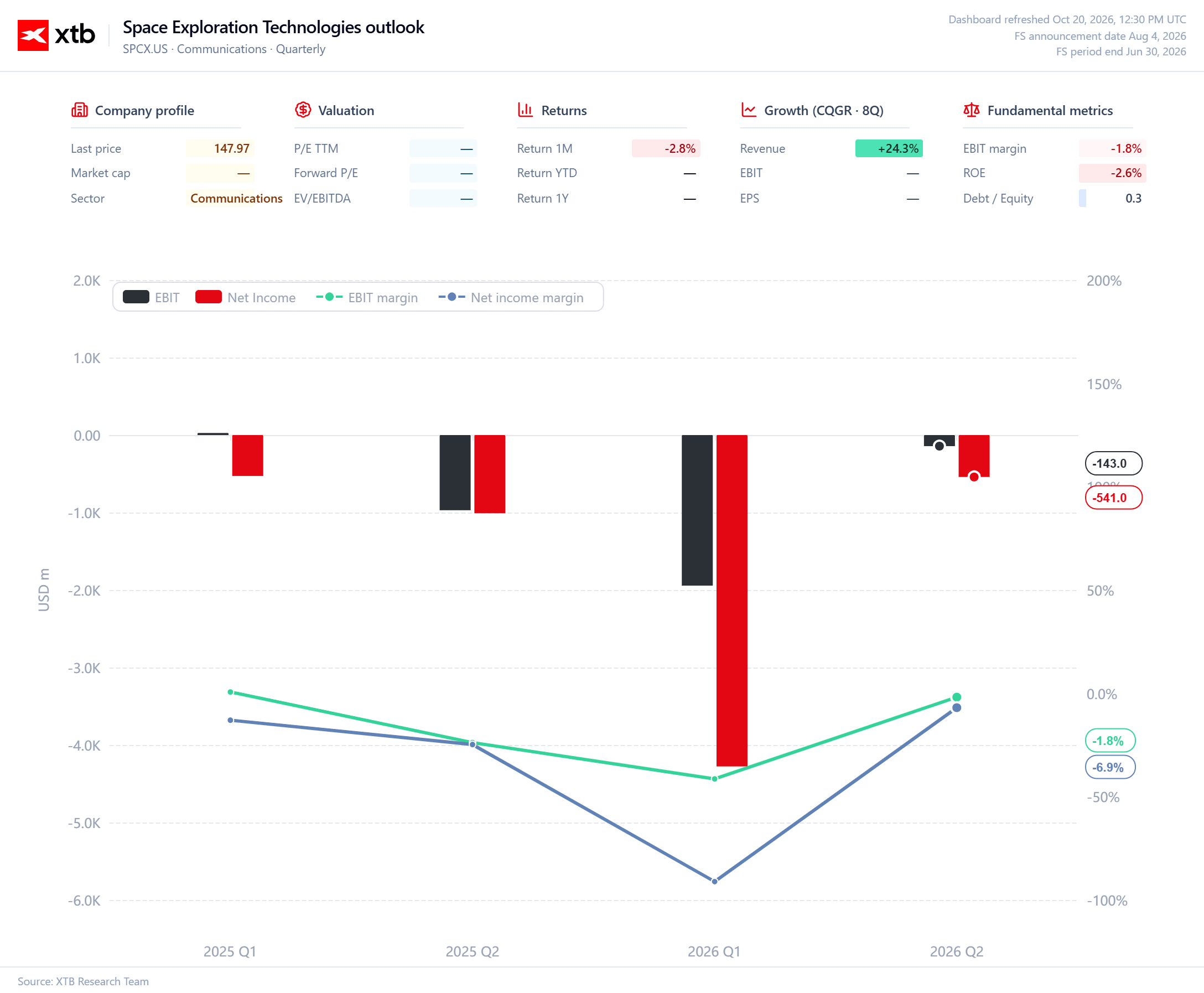
The situation is more challenging in the AI segment. Forecast revenue of $27.1 billion for the full year 2026 looks impressive, but an operating loss of $1.5 billion is a reminder that high sales do not necessarily translate into a profitable business model. Spending on computing power, data centers, and model development could rise just as quickly as demand. Investors will therefore want to understand whether current expenditure is laying the groundwork for future margin improvements or whether every new phase of growth will require another round of massive spending.
Scalability looks different again in the space business. A higher number of launches could improve infrastructure utilization and reduce unit costs, but Starship development requires investment before commercial benefits can emerge at a meaningful scale. Forecast launches of 147 for the whole of 2026, including 37 customer missions, will not automatically make the segment profitable. What matters is the composition of those missions, the revenue generated by each launch, and how quickly new technological capabilities begin to deliver recurring income.
Starship and AI Expand the Potential but Add to the Financial Burden
The Space segment is expected to post an operating loss of $525 million in the third quarter. For the full year, that loss could reach $2.3 billion despite revenue of $3.4 billion. This reflects the cost of developing technologies that could open up new markets in the future but do not yet offer sufficiently attractive economics. The number of launches alone will not justify such spending. SpaceX will need to demonstrate tangible progress in deploying Starship and establish a credible path toward operations capable of financing a larger share of their own development.
Similar tensions are evident in AI. Revenue could grow rapidly, but as long as the segment remains unprofitable, its expansion will increase the group’s overall need for capital. For SpaceX, this means maintaining a balance between long-term investments with extended payback periods and a business that already generates profits today. Starlink provides the group with financial support, but it is not an inexhaustible source of funding. The greater the spending on AI and space technologies, the more important it will become for these ventures to improve their own financial performance.
Speculation About a Tesla Merger Is a Separate Issue
Speculation about a possible merger between SpaceX and Tesla is also attracting attention. Both companies are developing technologies related to artificial intelligence, and Elon Musk leads both organizations. Such a transaction could change how individual ventures are financed and valued, but there is currently no official confirmation that it will happen. It should therefore not be treated as part of SpaceX’s base-case financial outlook.
If the idea returns in a more concrete form, the key issues will be the terms of the transaction, the allocation of control, and how the combined structure would distribute the costs of capital-intensive projects. Technological synergies alone do not guarantee benefits for investors. Combining two companies with different revenue sources and investment requirements could increase their financing capacity, but it could just as easily make it harder to assess the profitability of individual businesses.
The Quality of Growth Will Matter Most
SpaceX has the potential to build a business on an enormous scale, but potential is not the same as financial performance. Starlink demonstrates that the group can create a business with substantial revenue and high operating profitability. AI and the space segment, by contrast, remain ventures that require significant investment before their ability to generate sustainable, recurring revenue can be properly assessed.
That is why the most important issue will not be revenue growth alone, but whether SpaceX can translate expansion into a lasting improvement in profitability. If Starlink continues to increase its profits while AI and space operations begin to reduce their losses, the group’s scale could become its greatest competitive advantage. If, however, costs continue to rise as quickly as revenue, SpaceX will remain a company in which one profitable pillar finances an increasingly large portfolio of capital-intensive ambitions.
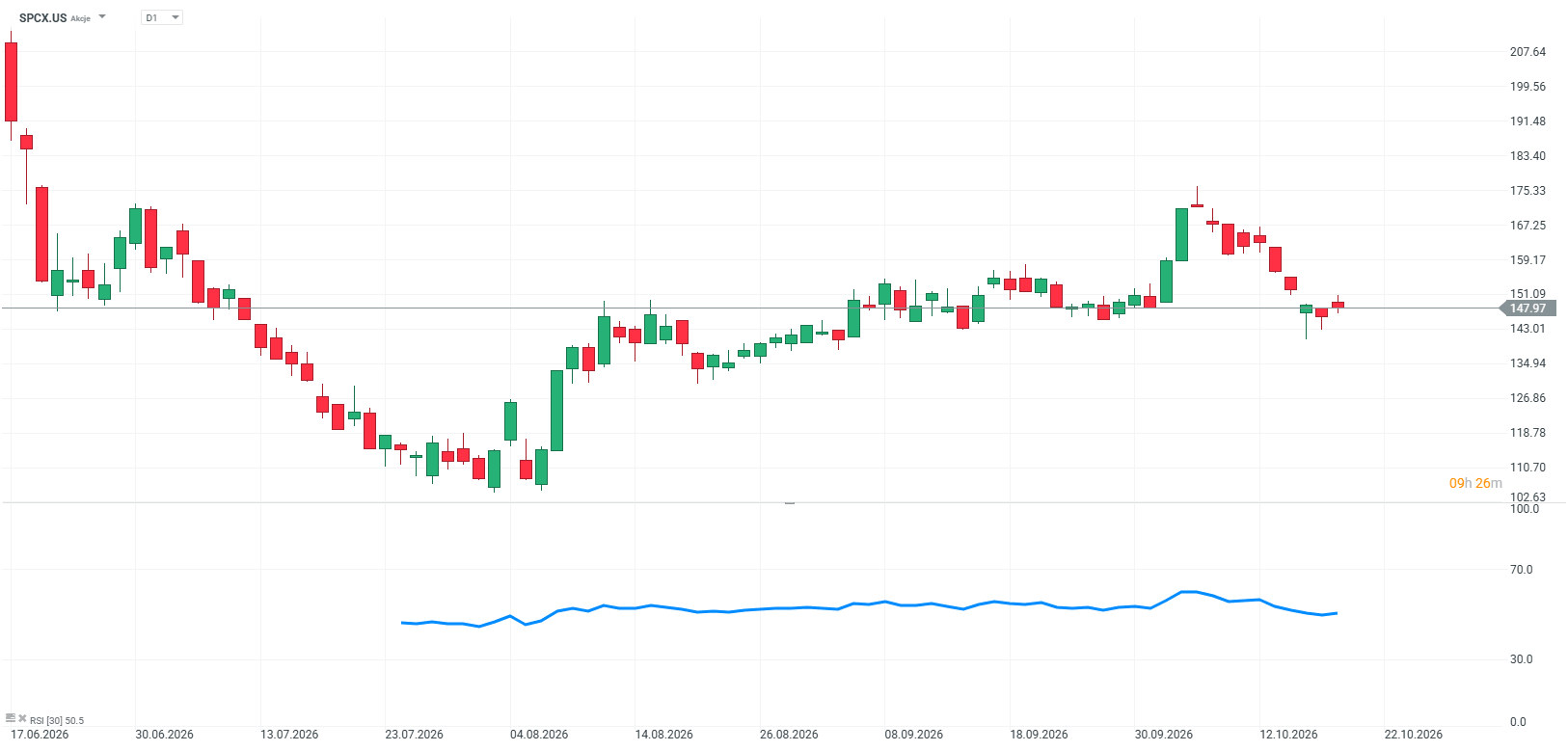
Source: XTB Reserach


Netflix results: An advertising setback



Daily Summary: Buyers Refuse to Give In


CoreWeave: Record Demand Collides with Crushing Costs



US OPEN: The wave of AI concerns is building again, oil returns near highs
This content has been created by XTB S.A. This service is provided by XTB S.A., with its registered office in Warsaw, at Prosta 67, 00-838 Warsaw, Poland, entered in the register of entrepreneurs of the National Court Register (Krajowy Rejestr Sądowy) conducted by District Court for the Capital City of Warsaw, XII Commercial Division of the National Court Register under KRS number 0000217580, REGON number 015803782 and Tax Identification Number (NIP) 527-24-43-955, with the fully paid up share capital in the amount of PLN 5.869.181,75. XTB S.A. conducts brokerage activities on the basis of the license granted by Polish Securities and Exchange Commission on 8th November 2005 No. DDM-M-4021-57-1/2005 and is supervised by Polish Supervision Authority.