

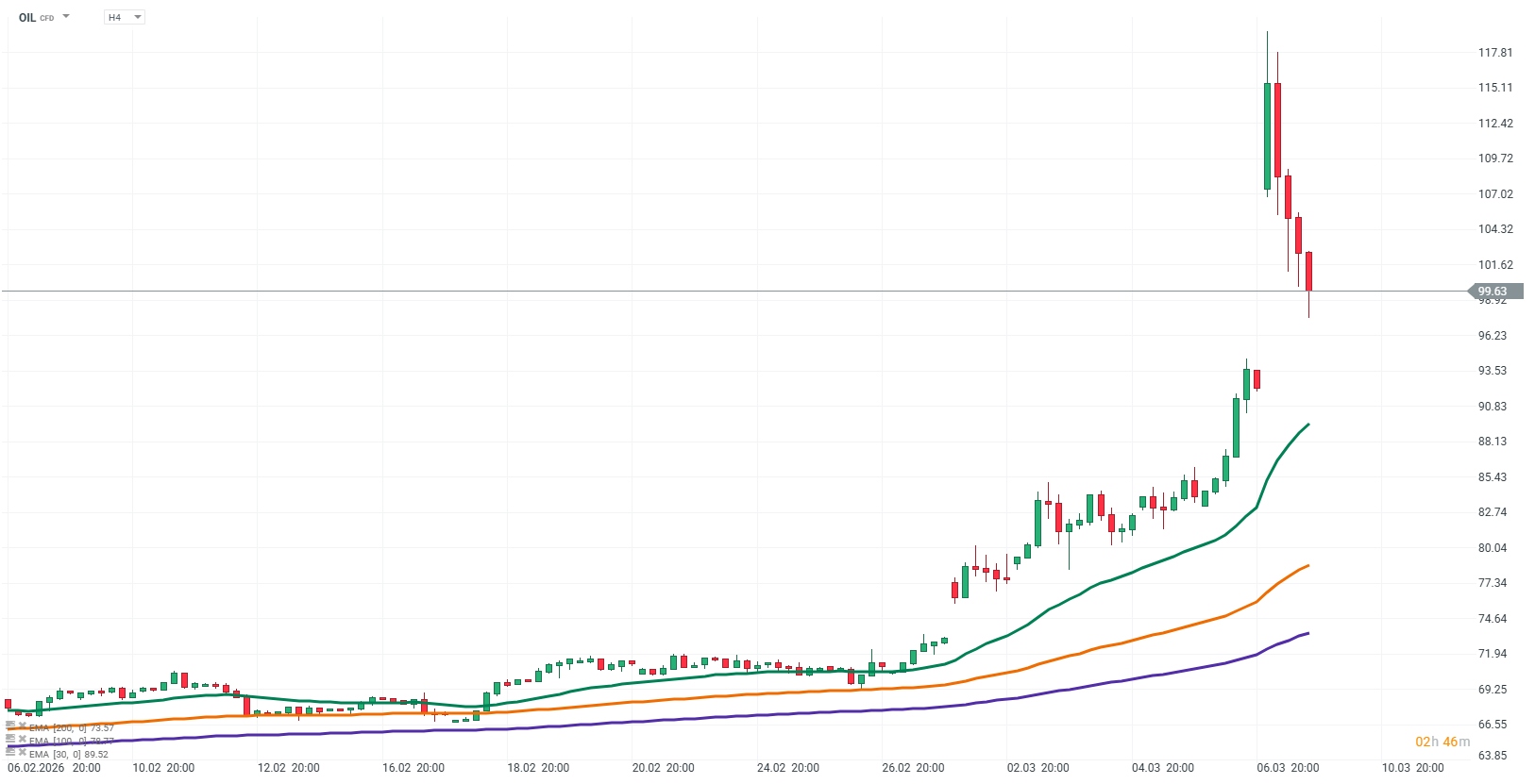
The oil market is in a state of heightened uncertainty. Brent crude prices reached nearly 120 dollars per barrel this morning, the highest level since 2022, in response to the escalation of conflict in the Middle East and disruptions along the key shipping route through the Strait of Hormuz. The surge in prices immediately reverberated across financial markets, triggering declines in stock indices in Asia, Europe, and the United States, as well as rising bond yields, reflecting growing inflation expectations and the risk of economic slowdown.
The G7 group, together with the International Energy Agency, has stated that it is considering a coordinated release of strategic oil reserves, which could help ease price pressures and stabilize the market. At this time, however, no decision has been made, and policymakers are refraining from immediate action, emphasizing the need for further analysis and coordination among member states. The absence of real oil shortages in the United States and Europe allows for a cautious approach and explains the delay in taking prompt action.
Although the reserves have not yet been released, the mere announcement of the possibility of such a move has already affected the market. Oil prices have begun to respond downward, and Brent is currently trading below 100 dollars per barrel, demonstrating how quickly markets react to signals from energy policy and expectations of supply stabilization.
G7 decisions and potential actions regarding strategic oil reserves remain among the main factors shaping investor sentiment and market forecasts. On one hand, a swift release of reserves could reduce price pressures and stabilize markets; on the other, any intervention carries geopolitical consequences and the risk of depleting a strategic instrument in times of crisis. Another significant factor is uncertainty over the further development of the conflict, which drives high risk premiums in oil pricing and may keep price volatility elevated in the coming weeks.
This situation also highlights the broader picture of the global energy market, where supply security, geopolitics, and changes in demand for fossil fuels continue to have a significant impact on macroeconomic stability. Markets today must monitor not only the evolution of conflicts in regions critical to oil production but also the political actions of countries holding strategic reserves, as their decisions can determine short-term price directions and shape inflationary and economic outlooks on a global scale.
In such circumstances, markets remain highly uncertain. Fluctuations in oil prices, G7 policy decisions, and geopolitical tensions in exporting regions will be decisive for the global economy, and investors, consumers, and producers must prepare for possible further changes in the availability and price of the commodity in the coming weeks.
Source: xStation5


Join Live: Oil Soars Past $100


Is the FDA sabotaging medical companies? UniQure’s valuation rollercoaster


Crypto up 4 % despite tension📈

Market Live: Oil Breaks Above $100
This content has been created by XTB S.A. This service is provided by XTB S.A., with its registered office in Warsaw, at Prosta 67, 00-838 Warsaw, Poland, entered in the register of entrepreneurs of the National Court Register (Krajowy Rejestr Sądowy) conducted by District Court for the Capital City of Warsaw, XII Commercial Division of the National Court Register under KRS number 0000217580, REGON number 015803782 and Tax Identification Number (NIP) 527-24-43-955, with the fully paid up share capital in the amount of PLN 5.869.181,75. XTB S.A. conducts brokerage activities on the basis of the license granted by Polish Securities and Exchange Commission on 8th November 2005 No. DDM-M-4021-57-1/2005 and is supervised by Polish Supervision Authority.