

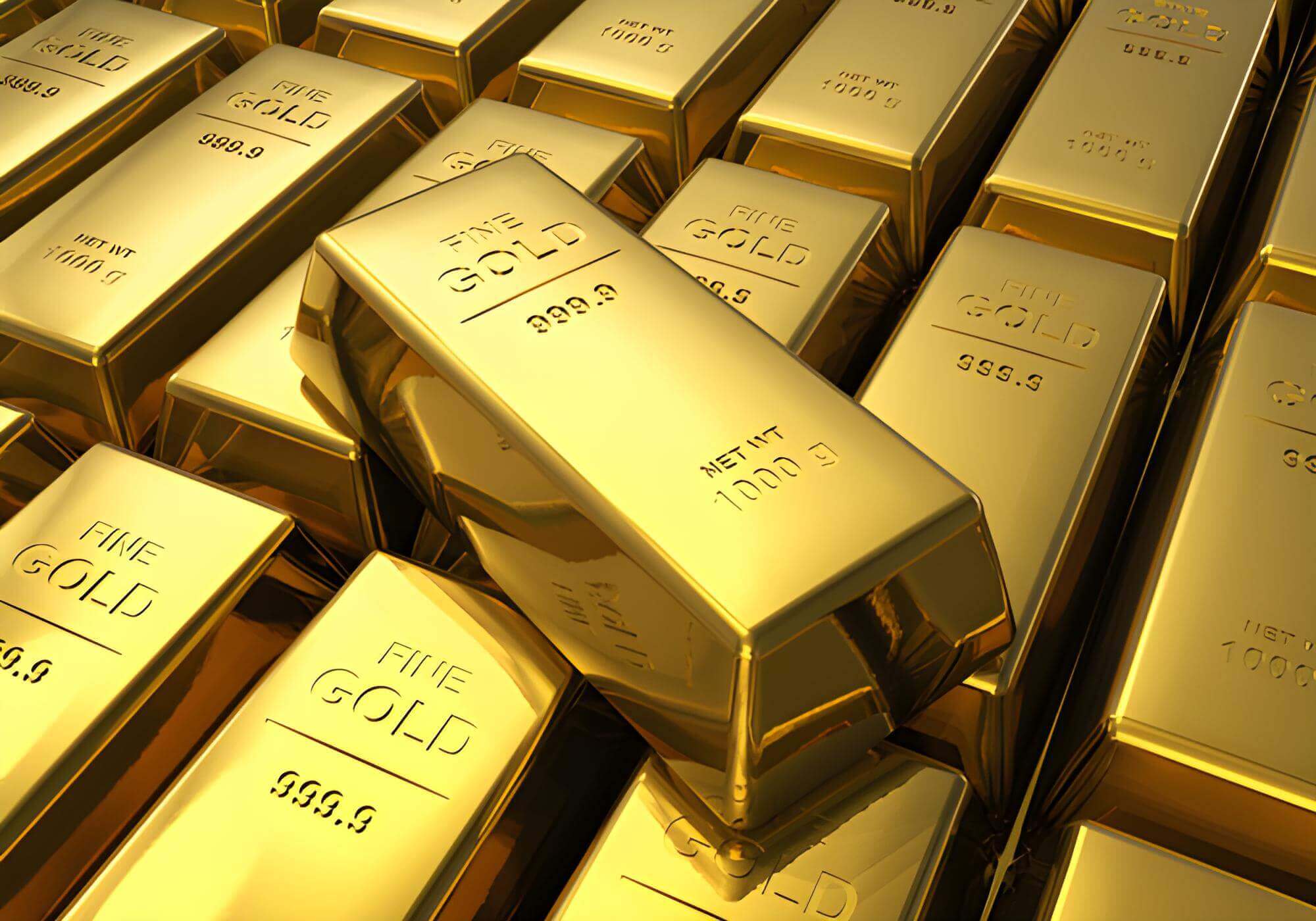
- Gold rises above $4,150 per ounce.
- The U.S. dollar is edging slightly lower.
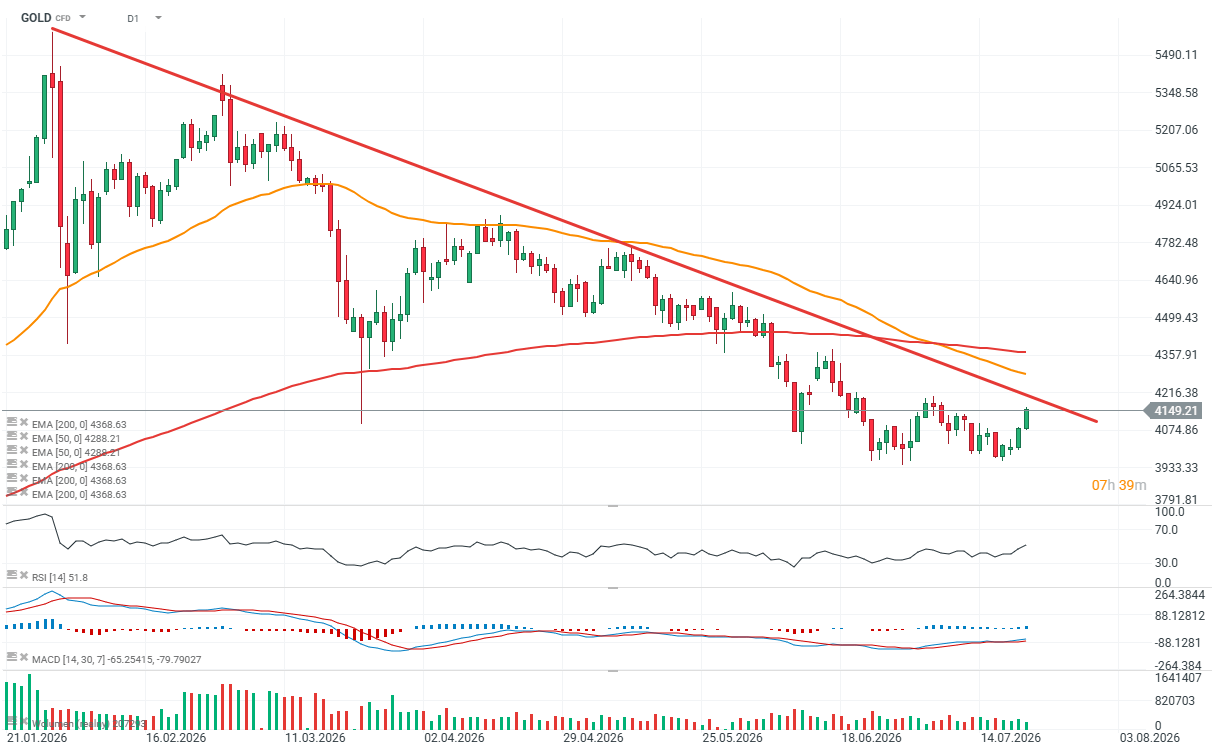
- Gold has once again successfully defended the key $4,000 support level.
- Gold rises above $4,150 per ounce.
- The U.S. dollar is edging slightly lower.
- Gold has once again successfully defended the key $4,000 support level.
Gold rises as investors hope for a possible ceasefire between the United States and Iran. A potential de-escalation could lower oil prices, ease inflationary pressures, and reduce the risk of further monetary tightening by the Federal Reserve. The precious metal is also receiving technical support after breaking above and successfully defending the key $4,000 per ounce level.
Key facts
- In recent days, Iran reportedly received a proposal from mediators for a 10-day ceasefire, raising hopes of easing tensions in the Middle East, although those hopes could ultimately prove short-lived.
- Despite this, Donald Trump has maintained an escalatory stance toward Tehran, suggesting the U.S. would be prepared to strike Iran's critical infrastructure if Iranian forces attack vessels in the Strait of Hormuz again. He also stated that the American public is "not opposed to war."
- Lower oil prices could ease inflationary pressures and reduce expectations that the Federal Reserve will keep interest rates higher for longer.
- The $4,000 per ounce level remains an important psychological support, although concerns over interest rates and continued uncertainty in the oil market could limit the scope of the recovery.
De-escalation could reduce pressure from oil and inflation
Elevated oil prices caused by supply disruptions in the Persian Gulf continue to weigh on gold. More expensive energy increases the risk of persistent inflation and reinforces expectations that the Federal Reserve could leave interest rates at restrictive levels or even deliver another rate hike.
Although gold is widely viewed as a long-term hedge against inflation, it does not generate income. Higher bond yields therefore increase the opportunity cost of holding the non-yielding metal, which may reduce investment demand.
Fed outlook remains the key driver
Investors are now awaiting the Federal Reserve's policy decision and comments from Chair Kevin Warsh following next week's meeting. Markets are currently pricing in a 64% probability of a September rate hike.
From a technical perspective, the breakout above the downtrend that had been in place since July 6 has improved short-term sentiment. However, gold may remain trapped in a broad consolidation range until investors receive clearer signals on the future path of U.S. interest rates and developments in the Middle East.
That said, concerns about further Fed tightening may be overstated. Chair Warsh has not indicated that additional rate hikes are currently the base-case scenario, while the approaching U.S. midterm elections later this year could reduce the likelihood of tighter monetary policy ahead of the vote.
From a technical standpoint, the next major resistance levels for gold are located around $4,800 and $5,000 per ounce, both reinforced by previous price reactions. Meanwhile, the $4,000 level continues to serve as a key support area.
Source: xStation5



Tesla and Alphabet results round up

Cocoa loses 5% amid rising inventories on ICE


Oil gains 3% amid US - Iran escalation and supply disruption on the Black Sea

🛢️Brent Crude Oil Tests $95 per Barrel
This content has been created by XTB S.A. This service is provided by XTB S.A., with its registered office in Warsaw, at Prosta 67, 00-838 Warsaw, Poland, entered in the register of entrepreneurs of the National Court Register (Krajowy Rejestr Sądowy) conducted by District Court for the Capital City of Warsaw, XII Commercial Division of the National Court Register under KRS number 0000217580, REGON number 015803782 and Tax Identification Number (NIP) 527-24-43-955, with the fully paid up share capital in the amount of PLN 5.869.181,75. XTB S.A. conducts brokerage activities on the basis of the license granted by Polish Securities and Exchange Commission on 8th November 2005 No. DDM-M-4021-57-1/2005 and is supervised by Polish Supervision Authority.
