


- US core PCE inflation rose by 0.2 percent MoM and 3.0 percent YoY in August, easing fears of Fed rate hikes.
- Crude oil prices gained value due to supply chain concerns and shipping issues in the Strait of Hormuz.
- Bitcoin prices rose near 84 200 USD following softened expectations regarding further rate hikes.

- US core PCE inflation rose by 0.2 percent MoM and 3.0 percent YoY in August, easing fears of Fed rate hikes.
- Crude oil prices gained value due to supply chain concerns and shipping issues in the Strait of Hormuz.
- Bitcoin prices rose near 84 200 USD following softened expectations regarding further rate hikes.
Macroeconomics 🌐
- US core PCE inflation rose in August by 0.2% MoM, while in annual terms it stood at 3.0% YoY compared to forecasted 3.3% and the previous reading of 3.3%.
- At the same time, the Dallas Fed Trimmed Mean metric settled at 1.9% YoY against expectations of 2.2%, repeating the downwardly revised result from the previous month.
- This publication brought clear relief to Wall Street investors, cooling fears of potential monetary policy tightening and pushing away the scenario of an interest rate hike at the October meeting of the Fed. Nevertheless, policymakers note that a single report does not yet determine a lasting disinflationary trend.
- European Central Bank President Christine Lagarde pointed out fiscal challenges facing France, whose public debt reaches 120% of GDP alongside the absence of a credible path for budget consolidation.
- The central bank head emphasized the necessity of implementing reforms that restore market confidence, while noting that the European financial system today possesses significantly higher resilience than during the crises of 2008 and 2011.
- Lagarde also unequivocally ruled out any potential bid in the French presidential election in 2027.
- ECB representative Isabel Schnabel indicated that the global rise in bond yields could naturally dampen price pressures in the eurozone, allowing a gradual return of indicators to target under well-anchored expectations.
- In Germany, inflation readings settled above market forecasts, heightening fears of another wave of cost pressure driven by the energy market across Europe.
- The UK Prime Minister announced strict fiscal discipline, ruling out unfunded spending and signaling a potential review of tax rates and fuel excise duties. At the same time, the British head of government opened a debate on the need to tighten trade relations with the European Union, indicating that without a return to closer economic cooperation it will be difficult to regain former GDP growth momentum.
Stock Market & Equities 📈
- Major indices on Wall Street gained value thanks to softer PCE inflation readings, supporting technology companies included in the Nasdaq index in particular.
- Markets brushed aside earlier concerns over GDP data revisions, gaining additional optimism from steadily growing capital expenditure on artificial intelligence infrastructure, including the deepening cooperation of entities such as Amazon and Anthropic.
- The third quarter demonstrated strong resilience of global equities against turmoil in the bond and commodity markets, and some analysts argue that the current bull market is unfolding under still relatively attractive fundamental valuations.
- Company Micron found itself in focus ahead of the evening publication of financial results, on which investors condition the further momentum of the bull market in AI-exposed stocks. However, the market fears that expectations have been set high, and the most challenging part of the earnings cycle and cost pressure may still lie ahead.
- European floors ended the session with a distinct sell-off, led by declines in France, Italy, and Germany. European sentiment was weighed down by hawkish comments from ECB officials, a tense budget situation in Paris, and weakness in the automotive sector, where Volkswagen faces further operational challenges while BMW considers new production investments in its domestic market. In this environment, Stellantis shares slid to new lows, ignoring the reaffirmation of full-year financial forecasts.
- On the Warsaw floor, the WIG20 index showed great relative strength, ignoring the sell-off on Western European exchanges. Gains were led by PGE, among others, whereas CD Projekt struggled with a key resistance zone, building a market position based on transformation from a creator of single hits into a structure managing global franchises.
- Aviation group Boeing secured a strategic contract with the US Navy for the development of next-generation fighters, strengthening its order book in the defense sector.
- More speculation is appearing around the valuation and stock market debut of Anthropic, and platform Robinhood reported the implementation of 24/7 stock trading and AI-based trading assistants.
- As of 19:28 CET, S&P 500 stands at 7,750 gaining 0.16%, losing 0.71% over the week, while Nasdaq 100 stands at 30,766 gaining 0.37%, losing 0.5% over the week, whereas DAX stands at 25,306 losing 1.21%, losing 1.63% over the week, and FTSE stands at 10,646 losing 0.59%, losing 1.43% over the week, while CAC 40 stands at 7,949 losing 1.2%, losing 2.16% over the week.
- Among individual stocks, Tesla stands at 350.68 losing 0.62%, losing 5.73% over the week, while Google stands at 349.80 gaining 2.61%, gaining 1.75% over the week.
Commodities 🛢️
- Crude oil prices dynamically gained value, breaking a recent series of declines. Behind the strong rebound are escalating concerns over supply chain stability, caused by reports of shipping issues in the Strait of Hormuz, a tragic explosion at a key Indian refinery, and communications from American refineries warning of shrinking diesel inventories.
- Technically, the return of WTI oil prices above USD 91.45 opens the door to testing key moving averages near USD 92.75.
- It is worth noting that according to calculations from Kpler or Goldman Sachs, crude oil supplies through the Strait of Hormuz returned to pre-war levels, though the situation remains far from normal.
- The platinum market struggles with the return of a supply surplus after three consecutive years of structural deficit, pushing prices below key technical barriers and triggering discussion on the durability of demand prospects in industry.
- Gold and silver prices came under distinct selling pressure, primarily driven by an increase in long-term US Treasury yields. Silver recorded a much deeper percentage correction, sliding near USD 60, while copper and palladium traded with elevated volatility.
- A US grain stocks report triggered a sharp sell-off in the agricultural futures market, pushing corn prices down by nearly two-thirds of the daily limit and putting pressure on wheat and soybeans.
- European natural gas rose in price in response to a tightening energy balance ahead of the heating season, while soft commodities saw declines in sugar alongside gains in coffee driven by concerns over harvests in Brazil.
- As of 19:28 CET, gold stands at 4,153 losing 0.68%, losing 3.06% over the week, while silver stands at 60.20 losing 1.96%, losing 6.26% over the week, whereas WTI crude stands at 90.96 gaining 2.31%, losing 1.59% over the week, and Brent crude stands at 98.29 gaining 2.78%, gaining 0.9% over the week, while natural gas stands at 2.9980 losing 0.43%, losing 7.58% over the week.
- Wheat stands at 677.85 losing 2.02%, losing 3.56% over the week, while corn is traded at 503.83 losing 3.45%, losing 4.46% over the week.
Currencies 💱
- The British pound was one of the strongest currencies of the session, reaching its highest levels against the US dollar in a month following weaker US inflation data and fiscal reform announcements in London.
- The EURUSD currency pair moved in a sideways trend with a slight downward bias, reacting to the contrast between higher inflation in Germany and monetary authority warnings regarding French debt conditions.
- The Australian dollar pared initial gains sparked by PCE data, giving ground to the greenback in the second phase of trading.
- Meanwhile, the Mexican peso remained under heavy pressure stemming from rapid unwinding of carry trade positions across emerging markets.
- As of 19:28 CET, EURUSD stands at 1.1338 losing 0.03%, losing 0.38% over the week, while GBPUSD stands at 1.3266 gaining 0.31%, gaining 0.24% over the week, whereas USDJPY stands at 157.27 gaining 0.01%, gaining 0.01% over the week, and USDCHF stands at 0.8351 gaining 0.26%, gaining 0.84% over the week, while the dollar index stands at 101.14 gaining 0.0%, gaining 0.37% over the week.
Cryptocurrencies 🪙
- Price quotes for Bitcoin rose near USD 84,200, benefiting from softened expectations regarding further rate hikes by the Federal Reserve following consumer spending data.
- During the session, the price attempted to breach key moving averages, reaching a local high of USD 85,600 before pulling back to a local consolidation area. In the altcoin segment, Kusama, dYdX, and Zcash stood out with above-average volatility, the latter recording a strong statistical price deviation.
- The monthly volume of payments completed via debit cards linked to stablecoin assets reached a record USD 1.17 billion, indicating growing adoption of digital payments in the real economy.
- A board member of the Swiss National Bank noted, however, that the expansion of private payment tokens and their looser connection to the traditional two-tier banking system hinders effective transmission of monetary policy.
- In the European regulatory landscape, the Netherlands government announced plans to introduce a tax on unrealized crypto capital gains starting in 2028. In parallel, the UK regulator outlined regulatory changes for 2027 that will allow financial institutions more flexibility in managing custodial protection for assets lent to generate interest.
- As of 19:28 CET, bitcoin stands at 83,867 gaining 0.59%, losing 0.84% over the week.
Geopolitics 🌍
- Passengers and security foiled an attempted hijacking and crash of a passenger plane belonging to Flydubai flying from Dubai to Tel Aviv, after the co-pilot attempted to destabilize the aircraft to target the Abraham Accords; the incident ended with an emergency landing in Saudi Arabia and urgent diplomatic consultations between Donald Trump and Benjamin Netanyahu.
- British security services reported gathering substantial evidence pointing to direct Iranian involvement in an incident at the Fairford air base, translating to heightened tension in relations between London and Tehran.
- Pakistan's Minister of Defense declared readiness to utilize all available military assets to defend Saudi Arabia against foreign aggression, while declining direct comment regarding potential troop participation in coalition operations in Yemen.
- A global tariff package introduced by Donald Trump's administration was challenged in the US Court of International Trade, where plaintiffs question the formal legal basis of the government invoking forced labor regulations.


Record after record: Micron smashes Q4 results, server overload crashes website, stock surges post-market
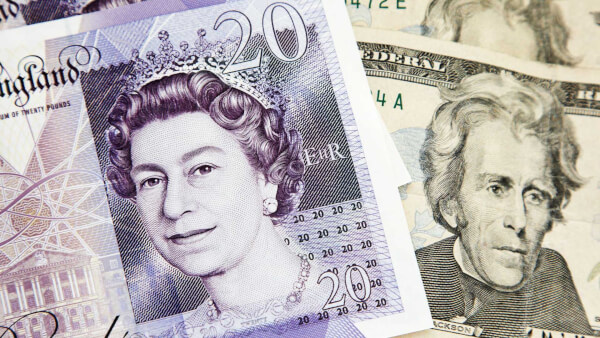


Chart of the Day: Pound strongest in a month (30.09.2026)



Morning Wrap: AI drives Nikkei 225 gains, oil prices decline (30.09.2026)

Economic Calendar - RBA Hawkish Move and a Wave of Central Banker Speeches
This content has been created by XTB S.A. This service is provided by XTB S.A., with its registered office in Warsaw, at Prosta 67, 00-838 Warsaw, Poland, entered in the register of entrepreneurs of the National Court Register (Krajowy Rejestr Sądowy) conducted by District Court for the Capital City of Warsaw, XII Commercial Division of the National Court Register under KRS number 0000217580, REGON number 015803782 and Tax Identification Number (NIP) 527-24-43-955, with the fully paid up share capital in the amount of PLN 5.869.181,75. XTB S.A. conducts brokerage activities on the basis of the license granted by Polish Securities and Exchange Commission on 8th November 2005 No. DDM-M-4021-57-1/2005 and is supervised by Polish Supervision Authority.