DE40

Trade DE40 CFD

Past performance or future forecasts does not constitute a reliable indicator of future performance.

Fees

Less cost, more investments

Competitive fees

Trade with leverage and keep costs low

Free deposits/withdrawals

Manage your funds. Take advantage of free deposits and withdrawals.

No custody fees

No custody fees up to 250,000 EUR. After that, 0.02% per annum, minimum £10.

Learn

What is CFD trading?

New to CFDs? Learn how CFD trading works and how you can trade on both rising and falling prices without owning the underlying asset. We explain the basics, financial leverage, potential benefits and risks in simple terms.

Read the Beginner’s Guide

Create an account

Open your XTB account in just a few simple steps. Get access to global markets and a wide range of investment opportunities.

Make a deposit

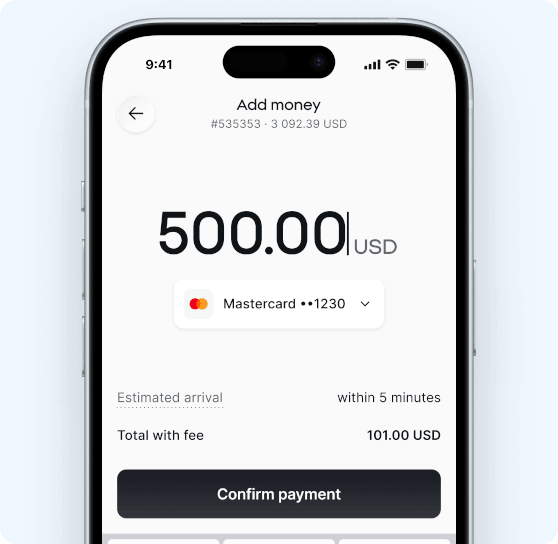
Add funds to your account using one of the available payment methods. Once your funds are available, you’re ready to start investing.

Trade DE40

Find DE40 in XTB App, choose how much you want to invest and place your order. Start building your portfolio on your terms.

And make your money work in many ways

Explore more ways to put your money to work - from global stocks and ETFs to more. Discover Investment Plans and earn interest on uninvested funds while you wait for your next investment opportunity.

Popular in the markets

Most traded CFDs

Discover where CFD traders are most active. Explore some of the most traded CFDs across global markets and see which instruments are in focus.

News

Keep your finger on the pulse with our latest market news

We are regulated by leading financial regulatory authorities across multiple markets worldwide.

About instrument

Invest in DE40 CFD

The DE30, also known as the DAX 30 , is a blue-chip stock market index that tracks the performance of 40 leading German companies listed on the Frankfurt Stock Exchange. Investors can trade the DE30 through a number of financial instruments such as CFDs (contracts for difference) , which allow them to speculate on price movements without owning the underlying assets.

CFDs can be advantageous as investors can benefit from both rising and falling markets. Thanks to XTB’s offering, it’s possible to invest in DE30 via CFDs.

It’s important to remember that CFDs come with risks as losses can exceed initial investments . It's essential to manage risk through the use of stop-loss orders and limit orders. Stop-loss orders help protect against significant losses , while limit orders can lock in profits.

When it comes to the best time to trade the DE30 , it is recommended to trade during the European trading session, which runs from 09:00 to 17:30 Central European Time . This period overlaps with the opening of other significant European markets such as the London Stock Exchange and Euronext . Trading during this session provides increased liquidity, and the impact of economic and political news is most likely to be felt during this time.

Interesting facts about the DE30 include its history and composition . The index was first introduced in 1988 with a base value of 1,000 and has since grown to become one of the most widely watched indices globally. The DE30 includes companies from various sectors such as automotive, pharmaceuticals, and financial services, among others. Additionally, the DE30 is one of the most heavily traded indices, with an average daily trading volume of around €5 billion.

It's important to keep in mind that trading the DE30 requires market knowledge, risk management, and discipline. Investors should also stay informed of economic and political news that could impact the index. Overall, investing in the DE30 can be a rewarding experience with potential for capital gains , but it's crucial to have a clear trading strategy and risk management plan in place.


Minimal spread

0.9

Margin

5%

Leverage

20

Commission

-

Market hours

-

Interesting Facts

What to know before investing in DE40

The Origin of DE30: The DAX, also known as the Deutscher Aktien Index or DE30, was created in 1988 with a starting index level of 1,163 points from the need for a complex stock index for Germany, a task by a Börsen-Zeitung newspaper editor - Frank Mella. His compelling ideas quickly moved from an idealistic project to a functioning index.

Expansion of the DE30: The DAX was initially composed of 30 companies, which led to the name DAX30 or DE30. However, recognising the need for a broader representation of Germany's vibrant economy, the index expanded to 40 companies as of September 20, 2021. This change makes it a more comprehensive barometer of Germany's economic activity.

Significance of DE30: The DE30 tracks 40 of the largest and most liquid German companies that trade on the Frankfurt Exchange. It is considered as an accurate gauge of Germany's economic health and is used as an indicator of trends in Germany's economy. Its influence extends beyond Germany, making it a metric for global economic analysis.

Trading System behind DE30: The prices to calculate the DAX Index come through Xetra, an electronic trading system. This advanced system ensures that the prices used in the index calculation are accurate, timely, and reflective of the current market conditions. The system plays a major role in maintaining the integrity and reliability of the index.

DE30 as Germany’s economic health indicator: The DE30 index represents diverse companies from various industries, providing a comprehensive view of Germany's economy. For instance, Bayer AG, a pharmaceutical and health company founded in 1863, is part of this index, enhancing its resilience across economic cycles.

DE30 and Germany's Economic Miracle: The success of the companies listed in the DE30 has greatly contributed to the so-called "German economic miracle," or Wirtschaftswunder. This term describes Germany's impressive economic rebirth following World War II, a phenomenon closely linked with the performances of the companies in the index.

DE30's Strong Performance: Between March 2016 and March 2021, the DE30 showed significant growth, demonstrating the strength of the German economy and its resilience during economic downturns. Despite various market corrections, the overall trend is higher highs and higher lows, making it a benchmark of robust economic growth.

DE30's Historic Aid Package: In May 2020, during the COVID-19 pandemic, the German parliament passed a massive aid package to bolster the German economy. This move, unprecedented in scale and swift in execution, had a positive impact on the DE30 and is a testament to Germany's proactive and robust response to economic crises.

DE30 Outperforms other European Indices: Compared to other European indices such as the UK100, CAC 40, EuroStoxx 50 PR, and the IBEX 35, the DE30 was the strongest performer through the pandemic year, March 2020 to March 2021. This shows the DE30's relative strength and resilience in volatile times.

80% Market Capitalisation: The DE30 represents approximately 80% of the market capitalisation of Germany's listed stock companies, underscoring its comprehensive coverage of Germany's corporate sector and its significance as a barometer of economic health.

FAQ

Do you have more questions?

Find answers to our most commonly asked questions. Still have a question? Please contact our customer support team.

Indices and stocks are not the same thing. An index is a statistical measure of the change in a portfolio of stocks. It is not itself a stock, but rather a composite of the performance of a group of stocks. Stocks, on the other hand, are individual securities that represent ownership in a particular company.

There is no one "best" index for trading. The best index to trade depends on your investment goals, risk tolerance, and other personal factors. Some popular indices for trading include the S&P 500, NASDAQ Composite, and Dow Jones Industrial Average.

It is difficult to rank indices, as different indices are designed to track different types of market segments and have different methodologies. Some of the most well-known indices include: S&P 500, NASDAQ Composite, Dow Jones Industrial Average, FTSE 100, Nikkei 225.

It is possible to trade on FOREX and to trade indices, but they are quite different instruments. FOREX is about trading currencies, while indices represent the performance of a group of stocks. It is not possible to say whether one is "better" than the other, as the choice of which instrument to trade will depend on the individual trader's goals and risk tolerance.